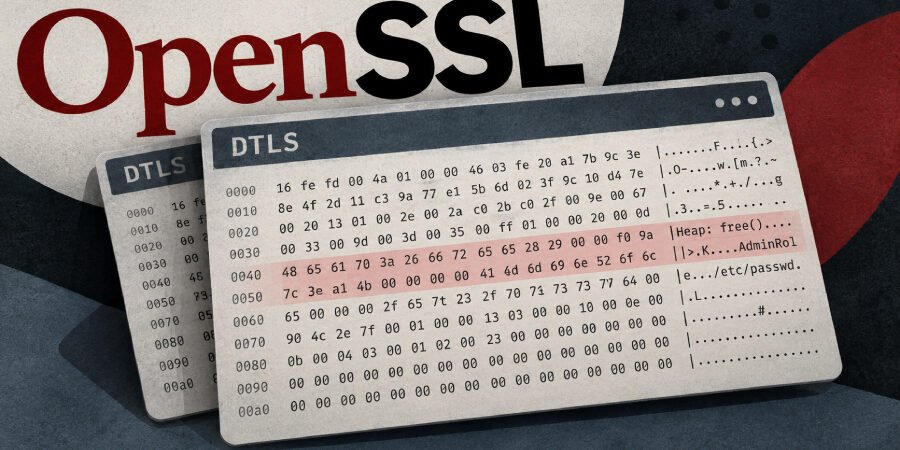
Critical OpenSSL Update: High-Severity DTLS Vulnerability Poses Memory Leak Risks
Introduction to the OpenSSL Vulnerability
On September 29, 2026, OpenSSL announced a high-severity flaw affecting the Datagram Transport Layer Security (DTLS) protocol. This vulnerability could result in unencrypted heap memory being exposed to the other end of a DTLS connection. The potential consequences of this flaw include not only information leaks but also program crashes, posing significant risks to applications relying on secure communications.
Understanding DTLS and Its Importance
DTLS is a variant of Transport Layer Security (TLS) designed to secure Datagram-based communications, making it vital for applications that rely on User Datagram Protocol (UDP). Unlike TCP, UDP does not establish a connection before data transmission, requiring DTLS to implement measures like message retransmission to maintain security and integrity. This characteristic makes DTLS essential for applications that prioritize low latency, such as video streaming, gaming, and VoIP.
Details of the Vulnerability
The reported flaw arises during the DTLS handshake process, specifically when a handshake message is retransmitted while a larger message is still being processed. If this resend occurs prematurely, it can lead to unintentional memory leaks, revealing sensitive data from the heap. Exploiting this flaw may allow attackers to retrieve sensitive data or even crash the affected application.
- Type of Vulnerability: Memory Leak
- Affected Component: DTLS Handshake Process
- Impact: Information disclosure and potential application crashes
- Severity Level: High
Potential Implications of the Security Flaw
The implications of this vulnerability are significant, especially for organizations that rely on DTLS for secure communications. Applications such as video conferencing tools, online gaming platforms, and real-time financial transaction services could all be susceptible to data leaks. This flaw underscores the necessity for implementing robust security measures and regular software updates to mitigate vulnerabilities.
Recommended Actions for Users and Developers
OpenSSL strongly recommends that all users and developers factor in the severity of this vulnerability and take immediate action:
- Update OpenSSL: Users are urged to upgrade to the latest version of OpenSSL that addresses this flaw.
- Review DTLS Implementations: Developers should examine their DTLS implementations to ensure they are not inadvertently exposing sensitive information.
- Conduct Security Audits: Organizations should perform regular audits to identify potential vulnerabilities and areas of concern in their systems.
Expert Analysis and Community Response
Cybersecurity experts have expressed their concern regarding the timing of the patch and the efficacy of existing communication protocols. As applications increasingly migrate to real-time communications, the risks associated with vulnerabilities like this one become more pronounced. Experts recommend that organizations not only apply patches promptly but also enhance their overall security posture by enabling additional security mechanisms, such as encryption and intrusion detection systems.
Conclusion
The recent high-severity vulnerability in OpenSSL’s DTLS implementation highlights the persistent risks facing organizations reliant on secure communications. Promptly addressing such vulnerabilities through updates and proactive security measures is crucial in safeguarding sensitive information and maintaining trust in digital communications.
Source: thehackernews.com