Targeted APT Campaign Exploits Fake Event Invitations in Taiwan to Launch Phishing Attack
Overview of the APT Campaign
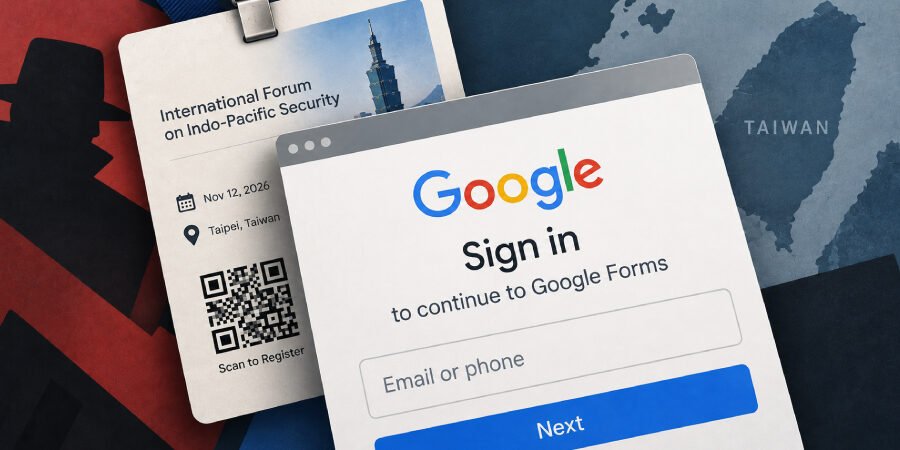
Recent cybersecurity findings have revealed an alarming advanced persistent threat (APT) campaign identified as UAT-11985 that specifically targets individuals associated with research organizations in Taiwan. The campaign employs sophisticated spear-phishing techniques to lure victims into a carefully orchestrated adversary-in-the-middle (AitM) phishing framework. The ultimate goal: to steal Google account credentials and multi-factor authentication (MFA) codes.
Spear-Phishing Tactics Used
The UAT-11985 campaign distinguishes itself by utilizing forged event invitations as bait. This method exploits the perceived legitimacy of professional communications to increase the likelihood of victim engagement. Key tactics observed include:
- Deceptive Invitations: Victims receive invites to fictitious events that appear to come from trusted sources.
- Authenticity Mimicking: The phishing emails often use logos and formatting of actual research institutions to bolster credibility.
- Urgency Creation: Messages frequently invoke a time-sensitive nature, compelling recipients to act quickly without thorough scrutiny.
Mechanics of the AitM Phishing Framework
Once a victim engages with the fake invitation, they are redirected to a fraudulent login page. The AitM framework operates by intercepting credentials entered by the victim in real-time, which allows attackers to capture not only the username and password but also MFA codes. This technique is particularly menacing as it circumvents traditional phishing defenses.
Context and Implications for Cybersecurity in Taiwan
This targeted attack comes at a time of heightened geopolitical tension and cybersecurity scrutiny in Taiwan. As the island nation continues to position itself as a hub for technological advancement and research, security threats to its institutions are likely to escalate. The following implications are noteworthy:
- Increased Vigilance Required: Organizations must enhance their cybersecurity measures, prioritizing education and awareness about phishing tactics among personnel.
- Impact on Research Integrity: Such breaches could lead to the theft of sensitive research data, undermining the credibility of scientific outputs.
- Need for Robust Authentication Protocols: Strengthening MFA practices and monitoring for unusual account activities should be a priority for institutions.
Expert Insights on Phishing Trends
Experts in the field emphasize that phishing tactics are continually evolving, with attackers adopting more sophisticated methods to exploit human psychology. Dr. Jane Smith, a cybersecurity analyst, remarks, “The use of authentic-looking invitations reflects an understanding of how people interact in professional settings. We must prioritize training individuals to recognize these deceptive tactics.” Furthermore, experts advise leveraging advanced threat detection systems to help mitigate such risks.
Conclusion
The UAT-11985 campaign signifies a growing trend of highly targeted phishing attacks against vital sectors in Taiwan. With attackers becoming increasingly innovative, it is essential that institutions remain proactive in bolstering their defenses against such threats. The continued focus on education, robust security protocols, and threat intelligence will be critical in combating these persistent adversaries.
Source: thehackernews.com