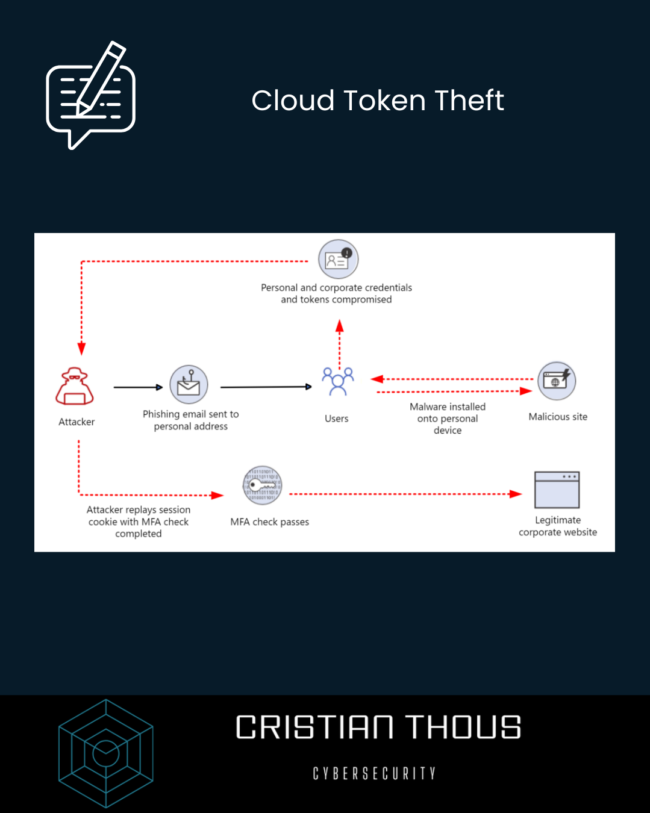
Cloud Token Theft

Introduction As organizations accelerate their migration to the cloud, identity has become the cornerstone of modern security architectures. Traditional network perimeters have dissolved, replaced by authentication and authorization mechanisms that rely heavily on tokens, sessions, and contextual trust. This evolution has significantly improved usability and scalability—but it has also introduced a new class of threats.…
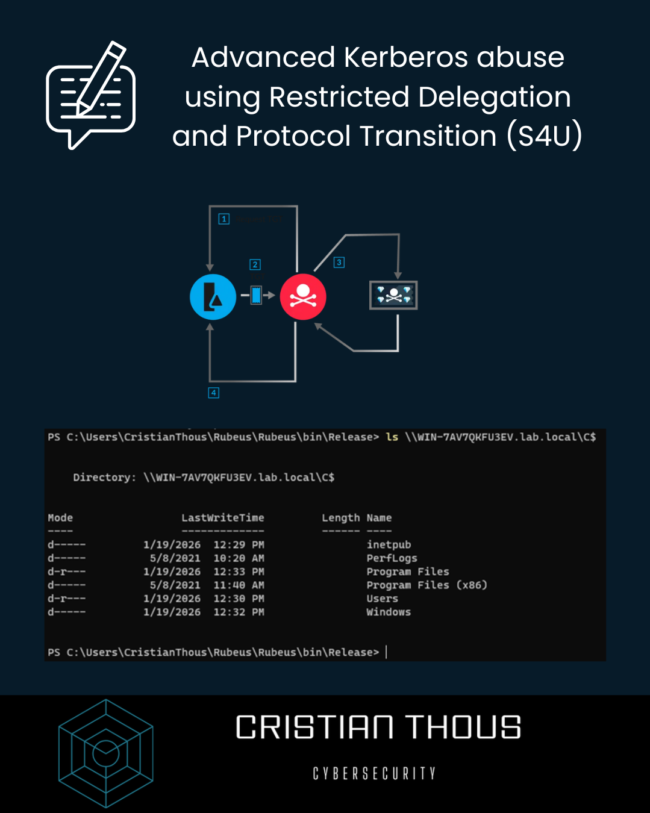
Advanced Kerberos abuse using Restricted Delegation and Protocol Transition (S4U)

Kerberos is one of the most robust authentication protocols ever designed for enterprise environments. Its strength, however, does not rely solely on cryptography, but on a strict trust model enforced by the Key Distribution Center (KDC). When that trust model is misdesigned or poorly maintained, Kerberos can become a powerful attack vector capable of leading…

Data Exfiltration and DLP in Corporate Environments + Lab

Data exfiltration—also known as Data Exfiltration—refers to the unauthorized transfer of sensitive information outside a secure corporate environment. This risk has become one of the top security concerns, as it can lead to theft of confidential information, reputational damage, and significant financial losses. Requirements: Responsibility: In this tutorial we will use hacking techniques, with the…

LockBit Unleashed: How Ransomware is Redefining Cybersecurity Threats in 2024

This tutorial provides an in-depth exploration of the LockBit ransomware, one of the most sophisticated and dangerous ransomware strains in 2024. This blog is designed for cybersecurity professionals, IT administrators, and businesses aiming to understand the mechanics of ransomware attacks and how to defend against them. It combines technical insights, practical attack simulations, and mitigation…