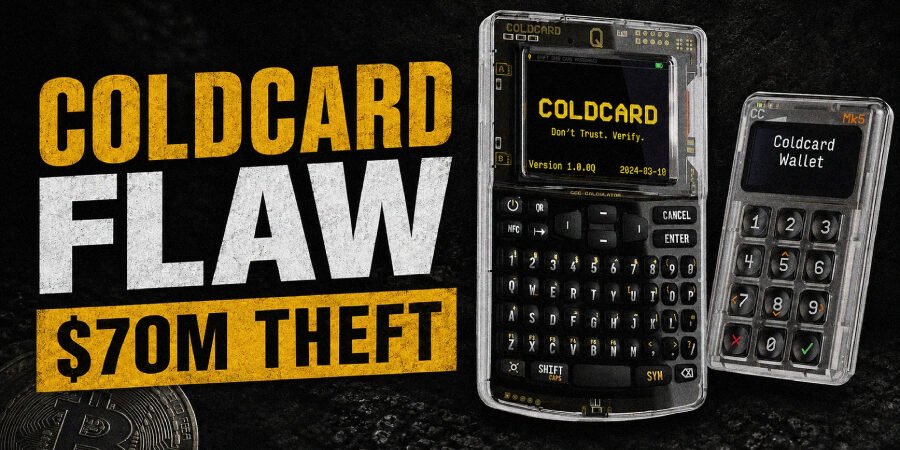
Security Flaw in Coldcard Hardware Wallet Connected to $70 Million Bitcoin Heist
The Incident: A Swift and Significant Crypto Theft
On July 30, a significant security breach in the cryptocurrency world came to light after an attacker managed to drain 1,196 Bitcoin addresses within a mere 41 minutes. This audacious act resulted in the theft of 1,082.65 BTC, valued at approximately $70.2 million at the time. The rapid theft raised urgent questions about the security protocols surrounding hardware wallets, particularly the Coldcard wallet, produced by the Canadian company Coinkite.
Understanding the Technical Flaw
The flaw at the heart of this alarming theft was traced to a firmware integration error identified in March 2021. During this period, the seed generation process erroneously directed to a deterministic software pseudorandom number generator (PRNG), compromising the wallet’s ability to securely generate unique key pairs essential for cryptocurrency transactions.
- Firmware Error: The incorporation of a defective random number generator eroded the fundamental security of the wallet.
- Seed Generation Vulnerability: Flawed seed generation can lead to predictable wallet keys, allowing potential attackers to exploit the wallet’s defenses.
- Impact on Users: Users who relied on this firmware were unwittingly exposed to theft.
Galaxy Research’s Findings
Galaxy Research played a crucial role in mapping the theft, linking it directly to the Coldcard wallet’s vulnerabilities. Their analysis not only shed light on the method employed by the attacker but also raised alarms about the implications of relying on hardware wallets that had such critical flaws.
- Mapping the Sweep: Utilizing network and transaction analysis, Galaxy Research tracked the movement of the stolen Bitcoin.
- Emerging Threats: This incident highlights the need for ongoing scrutiny of hardware wallet security measures.
Industry Implications: Trust and Security Risks
This incident poses significant implications for both individual users and the cryptocurrency industry at large. The trust in hardware wallets, often perceived as the gold standard for security, could be shaken, prompting users to reconsider their options for storing digital assets.
- Decreased User Confidence: Users may experience hesitance towards adopting hardware wallets due to fears of similar vulnerabilities.
- Regulatory Scrutiny: Increased regulatory focus on security standards for hardware wallets may follow as incidents like these draw attention from authorities.
- Enhancement of Security Practices: Potential for companies to improve their security protocols, including regular audits and robust quality assurance processes.
Expert Opinions on Future Security in Crypto
Experts in the field of cybersecurity and cryptocurrency have weighed in on the implications of this breach. Many stress the importance of multi-layered security protocols and the adoption of open-source practices to avoid similar situations in the future. Key insights include:
- Multi-factor Authentication: Enhanced security measures such as requiring multiple forms of verification for transactions could mitigate risks.
- Transparency and Open Source: Adopting open-source software could allow for community scrutiny and quicker identification of potential vulnerabilities.
- Regular Firmware Updates: Users should prioritize hardware wallets that provide frequent and transparent firmware updates to guard against emerging threats.
Conclusion
The $70 million theft linked to the firmware flaw in Coldcard hardware wallets serves as a stark reminder of the ongoing security challenges in the cryptocurrency landscape. Users must remain vigilant and informed about the tools they utilize for secure transactions and storage. With the rise of sophisticated attacks, the industry may need to evolve rapidly to safeguard users against potential threats.
Source: thehackernews.com