Critical Security Flaw in Parallels Desktop for Mac: Non-Admin Users Can Elevate Privileges
Overview of the Flaw
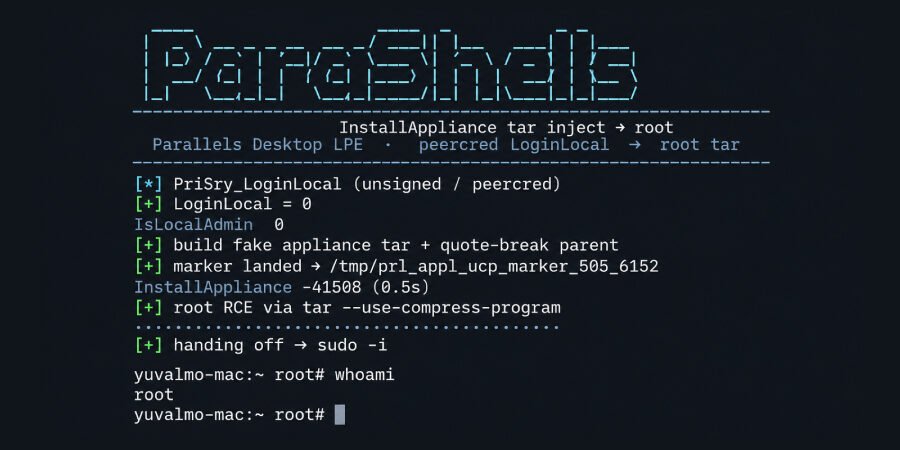
A recent vulnerability discovered in Parallels Desktop for Mac has raised serious security concerns, as it allows ordinary local accounts to execute code with root privileges. This means that non-admin users could potentially gain the highest level of access on a Mac, which poses significant risks to user data and system integrity.
Nature of the Vulnerability
According to cybersecurity firm JFrog, the flaw requires that malicious code is already being executed by a normal user account on the targeted machine. This limitation indicates that the vulnerability is not exploitable remotely, but it still presents a considerable threat to users who may inadvertently run compromised applications.
Implications for Intel Mac Users
The release of Parallels Desktop 27 includes a patch to address this vulnerability. However, this update is not applicable to Intel-based Macs, as they cannot install the new version. This presents a dilemma for users on older hardware, as they will remain vulnerable unless they transition to newer models compatible with the latest software updates.
Community and Expert Reactions
The discovery of this flaw has prompted alarm within the cybersecurity community. Experts emphasize the importance of timely updates and patch management to mitigate risks associated with software vulnerabilities. Yuval Moravchick, the lead researcher at JFrog, stated that while the vulnerability is limited to localized attacks, the ease with which non-admin users can exploit it is particularly worrisome.
- The risk of data breaches increases if users are not aware of their operating environment.
- Companies relying on Parallels Desktop should assess their risk profiles and consider additional security measures.
- Users with Intel Macs may want to explore alternative solutions or hardware upgrades to maintain security resilience.
Mitigation Strategies
For individuals and organizations currently using Parallels Desktop, there are several steps that can be taken to mitigate the risk posed by this vulnerability:
- Regularly check for software updates and apply patches promptly.
- Monitor application activity to identify any unauthorized code execution.
- Educate users on recognizing potential phishing attempts or dubious applications that could exploit the vulnerability.
Conclusion
The Parallels Desktop vulnerability serves as a stark reminder of the potential security risks that can arise from software flaws. As technology progresses, the importance of maintaining robust security practices cannot be overstated, especially for users relying on applications that interact with sensitive data.
Source: thehackernews.com