New Carbonato Botnet Exploits Docker Hosts to Deploy Telegram-Controlled Hermes AI Agent
Introduction to Carbonato Botnet
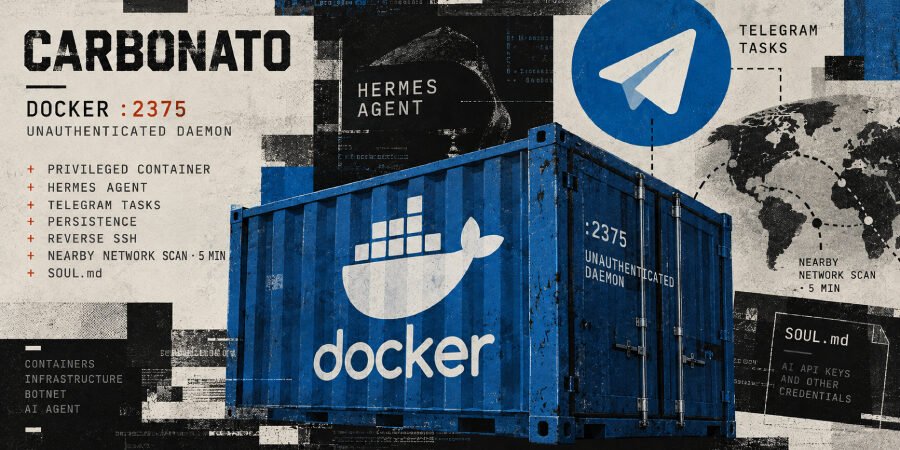
In a concerning development within the cybersecurity landscape, researchers have uncovered a new botnet known as Carbonato. This malware demonstrates a sophisticated level of operation, targeting publicly accessible Docker daemons to deploy an artificial intelligence (AI) framework called the Hermes Agent. The discovery highlights the evolving tactics employed by cybercriminals to leverage cloud-native technologies for malicious purposes.
How Carbonato Works
Carbonato targets Docker hosts that are poorly secured, exploiting vulnerabilities in exposed Docker daemons. Once a host is compromised, the botnet installs the Hermes Agent framework without any modifications. One of the significant aspects of this operation involves the alteration of the framework’s SOUL.md persona file, which serves as the command and control configuration for the AI agent.
- The framework is installed unchanged, ensuring it operates as intended by its original developers.
- The SOUL.md persona file is overwritten, directing the agent to perform tasks sent through Telegram.
Implications of Deploying Hermes Agent
The deployment of the Hermes Agent by the Carbonato botnet has several implications for cybersecurity and the broader technology ecosystem:
- Automation of Attacks: The agent’s AI capabilities could enable more sophisticated and automated attack strategies, making it easier for attackers to execute malicious tasks.
- Telegram as a Command Platform: By leveraging Telegram, a widely used messaging service, the botnet can communicate and control compromised systems without raising significant red flags.
- Potential for Broader Impact: The combination of Docker’s increasing popularity and the open-source nature of the Hermes Agent may lead to widespread exploitation if preventative measures are not implemented.
Research and Response to Carbonato
Cybersecurity researchers, specifically from the company ThreatDown, have been instrumental in identifying and analyzing the Carbonato botnet. Their work underscores the necessity for vigilance and proactive security measures from organizations utilizing Docker and other cloud technologies. Recommendations include:
- Strengthening security protocols around Docker installations.
- Regular monitoring and auditing of configuration settings to prevent unauthorized access.
- Educating personnel on the risks associated with poorly configured cloud services.
The Bigger Picture: Evolving Cyber Threats
The emergence of the Carbonato botnet is a stark reminder of the ongoing evolution in cyber threats. As more organizations migrate to cloud-native environments, cybercriminals are increasingly targeting these platforms. The situation calls for a robust strategy incorporating advanced security tools and practices to address vulnerabilities inherent in evolving technologies.
Conclusion
The Carbonato botnet’s exploitation of Docker hosts to deploy the Hermes AI Agent marks a significant shift in how malware is deployed and operated. As cyber threats continue to innovate, organizations must adapt their defenses accordingly to safeguard against such dynamic and evolving threats.
Source: thehackernews.com