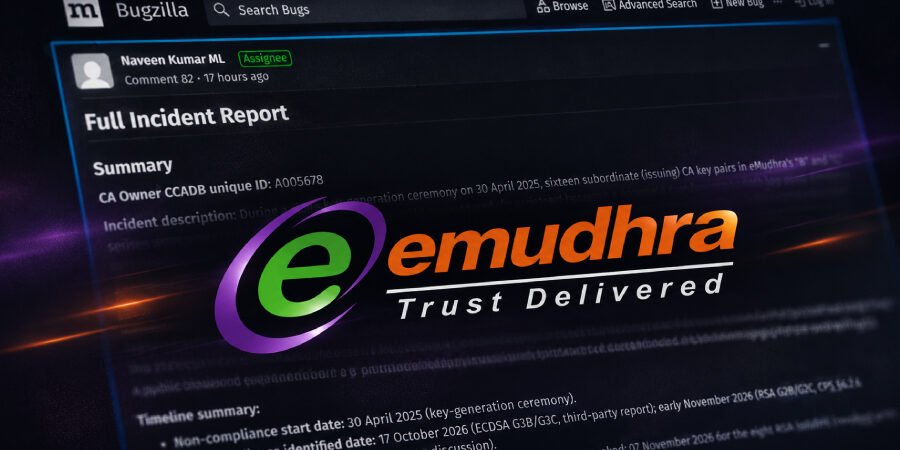
eMudhra Revokes Additional Intermediate Certificate Authorities Following Key Compromise
Background of the Key Compromise
In October 2023, eMudhra, a prominent digital signature and certification provider, faced a critical security incident involving a key compromise. The event raised alarms across the cybersecurity community as eMudhra is responsible for issuing certificates that are crucial for secure communications over the internet. The incident highlighted vulnerabilities not just in the systems employed by eMudhra but also in the broader framework of public key infrastructure (PKI).
The Impact of the Python Script Error
The newly revoked intermediate certificate authorities (CAs) were initially deemed unaffected by the key compromise incident that unfolded in October. However, an internal investigation revealed that a flaw in an in-house Python script had critical implications. While the private keys of the eight CAs remained intact, the error in the script indicated that these authorities had been compromised in a different context.
The specific issue stemmed from a single line in the script, which could have potentially enabled unauthorized access or manipulation of the certificate signing process.
Details of the Revocation
This recent decision to revoke the eight intermediate CAs is significant. The revoked CAs include a mix of those that were previously thought to be secure and operative. The revocation means that any digital certificates issued under these authorities will no longer be trusted, affecting numerous entities relying on eMudhra’s services for secure communication.
- The private keys for these CAs were not compromised, but operational integrity was questioned.
- Certificates signed by these CAs will now face a validity crisis, necessitating a rapid response from affected organizations.
- eMudhra has communicated with its clients to ensure they are aware of the situation and can take necessary action.
Implications for Digital Trust and Security
The repercussions of this incident extend beyond eMudhra itself and touch on the foundational concept of digital trust. Trust in certificate authorities is built on the premise of robust security practices; such lapses can sow doubt among customers and partners.
Experts suggest that this incident serves as a stark reminder to the certificate authority systems, emphasizing the need for:
- Regular audits of internal processes to mitigate human error.
- Implementation of more stringent security checks on scripts and tools used in certificate management.
- Establishment of clear communication channels with clients in case of incidents.
Expert Analysis on Future Security measures
Cybersecurity experts agree that the scenario presented by eMudhra necessitates a reevaluation of security practices in the PKI landscape. The flaws found in the Python script underline the risks associated with automated systems in critical security roles.
Future security measures could include:
- Increased emphasis on code review processes to catch potential vulnerabilities before they lead to significant issues.
- Creation of a culture that prioritizes security and awareness throughout the organization.
- Adoption of multi-signature protocols to enhance the security of issuing and managing certificates.
Conclusion
The revocation of eight intermediate CAs by eMudhra illuminates the fragility of digital trust in cybersecurity. As organizations increasingly rely on digital certificates for secure communications, adherence to rigorous security protocols becomes crucial. The incident is an important learning opportunity for the industry as a whole regarding the potential risks of automation in cybersecurity processes.
Source: thehackernews.com