Critical Zero-Day Vulnerability in Cacti Allows Remote Code Execution with Minimal Interaction
Overview of the Vulnerability
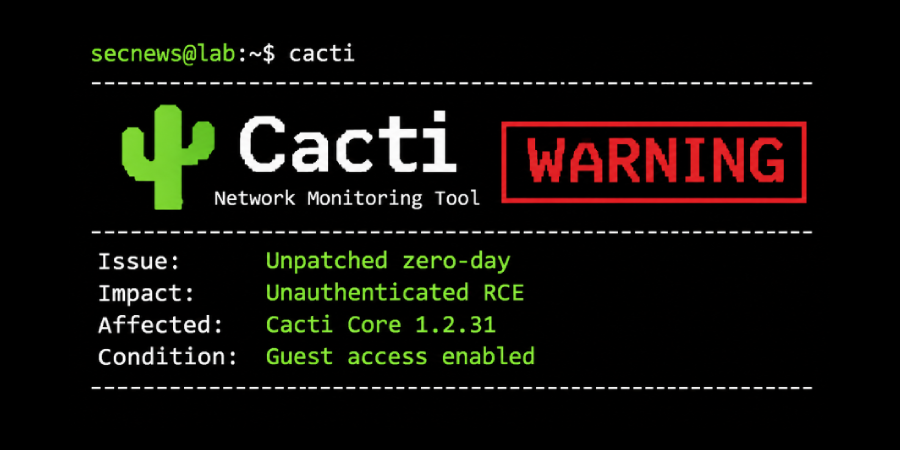
A recently discovered zero-day vulnerability in Cacti, an open-source network monitoring tool, poses a significant security risk as it allows remote code execution (RCE) through a series of four HTTP requests. This exploitation route, dubbed 4HTTP2SHELL and 4HTTP2ROOT, has emerged without a corresponding Common Vulnerabilities and Exposures (CVE) identifier, raising concerns among security professionals.
How the Exploit Works
The exploit takes advantage of a path that leads from a newly initiated, unauthenticated HTTP session directly to command execution on the Cacti server. This means that attackers can potentially execute arbitrary commands without needing prior authentication, making it particularly dangerous.
- Execution in Minimal Steps: The exploit is executed in just four HTTP requests, minimizing detection chances during the attack.
- Unauthenticated Access: The flaw allows attackers to leverage systems that do not require credentials, thereby widening the potential attack surface.
Implications for Users
The implications of this vulnerability are severe, especially for organizations that rely on Cacti for network monitoring and performance analytics. With the ability for attackers to execute arbitrary commands, potential risks include:
- Data Breaches: Attackers could exfiltrate sensitive data from the network monitored by Cacti.
- System Compromise: Full system takeover might be achieved, allowing attackers to implement malware or initiate further exploits.
- Service Disruption: A successful RCE attack could lead to downtime or loss of functionality in critical network monitoring processes.
Expert Opinions and Analysis
Security analysts have voiced concerns about the risks associated with this unpatched vulnerability. Experts emphasize the pressing need for users to implement security measures to mitigate potential attacks:
“The combination of unauthenticated access and the rapid execution of commands makes this vulnerability particularly concerning. Organizations must enhance their monitoring and defenses against such exploitations,” said a cybersecurity researcher.
In the absence of a CVE, organizations may be unaware of the specific risks this vulnerability poses, underscoring the need for proactive security measures, including:
- Regular Updates: Keeping software installations up to date is crucial, especially with open-source solutions.
- Access Controls: Implement stricter access control measures to limit unauthorized access to network management tools.
- Intrusion Detection Systems: Deployment of monitoring solutions could help identify unusual behavior indicative of an ongoing attack.
Conclusion
The newly identified zero-day vulnerability in Cacti represents a significant threat to network security, particularly given its potential for remote code execution through minimal HTTP requests and unauthenticated access. Immediate attention and remedial actions are needed to protect vulnerable systems and data from malicious actors.
Source: thehackernews.com