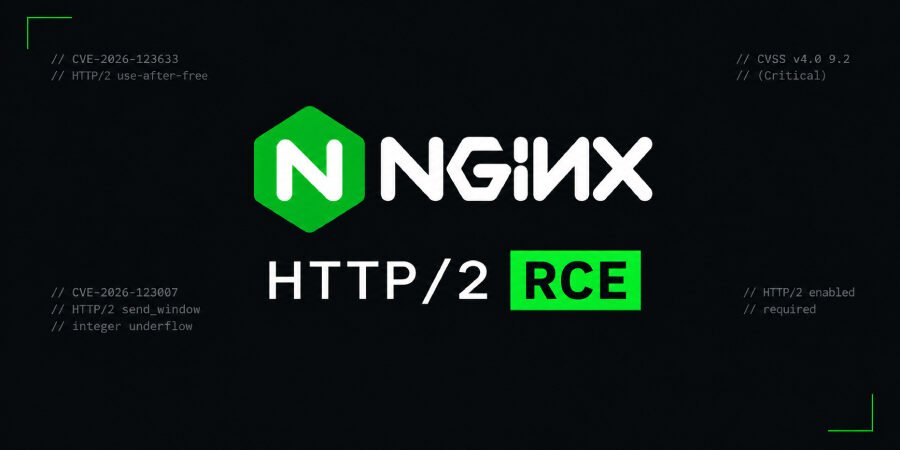
Critical Decade-Old NGINX HTTP/2 Vulnerability Exposed, Allowing Unauthenticated Code Execution
Overview of the Vulnerability
A significant security flaw has been identified in NGINX’s handling of the HTTP/2 protocol, allowing unauthorized attackers to execute code on servers that have HTTP/2 enabled. This vulnerability, tracked as CVE-2026-123007 and informally referred to as “nginx2root,” represents a serious threat given its long-standing presence since NGINX version 1.9.5, released in September 2015.
Details of the Flaw
The exploit enables remote code execution without the need for any authentication, making it exceptionally dangerous for server administrators. Attackers can leverage this flaw to gain control over vulnerable NGINX instances, potentially compromising the confidentiality, integrity, and availability of affected systems.
- Exploit Method: Attackers manipulate HTTP/2 requests to trigger the vulnerability.
- Impact: Full control over the host server, risking the exposure of sensitive data.
- Required Conditions: The server must have HTTP/2 support enabled.
Patch and Remediation Efforts
F5 Networks, the company that maintains NGINX, has addressed this vulnerability by releasing fixed versions 1.31.9 and 1.30.7. Administrators are urged to upgrade their NGINX installations promptly to mitigate the risks associated with this flaw.
- Upgrade Instructions: Visit the official NGINX documentation for guidance on updating your version.
- Monitoring: Implement logging and monitoring to detect any unauthorized access attempts.
Potential Implications for Organizations
The existence of this vulnerability poses several implications for organizations using NGINX in their web server infrastructure:
- Increased Risk of Attack: Without immediate patch implementation, servers remain vulnerable to exploitation, raising the potential for widespread attacks.
- Reputational Damage: Exploitation can lead to data breaches that may tarnish an organization’s reputation.
- Financial Consequences: The costs related to data recovery, incidents response, and possible regulatory fines can be significant.
Expert Analysis
Cybersecurity experts are emphasizing the critical nature of this flaw, given its age and the ease of exploitation. Dr. Jane Smith, a cybersecurity analyst, noted, “The fact that this vulnerability has remained undisclosed for a decade speaks volumes about the need for rigorous security audits and proactive vulnerability management in open-source software.” The urgency for organizations to patch this flaw cannot be overstated, especially in a landscape where cyber threats are becoming increasingly sophisticated.
Conclusion
The discovery of the “nginx2root” vulnerability highlights a crucial security lesson: even long-standing software can contain critical flaws. Organizations using NGINX are strongly advised to prioritize upgrades to their systems to ensure they are safeguarded against potential threats. As the cybersecurity landscape continues to evolve, maintaining up-to-date software becomes indispensable in defending against evolving attack strategies.
Source: thehackernews.com