Security Researchers Unveil Node2Shell RCE Exploit in Node.js Through Crafted Brotli Data
Introduction to the Node2Shell Exploit
In a significant development within the cybersecurity landscape, researchers at Imperva have showcased an alarming exploit known as Node2Shell. This proof of concept exploits a flaw in the popular Node.js platform, potentially allowing malicious actors to execute arbitrary code on systems running the official Node.js build.
The Mechanics Behind the Attack
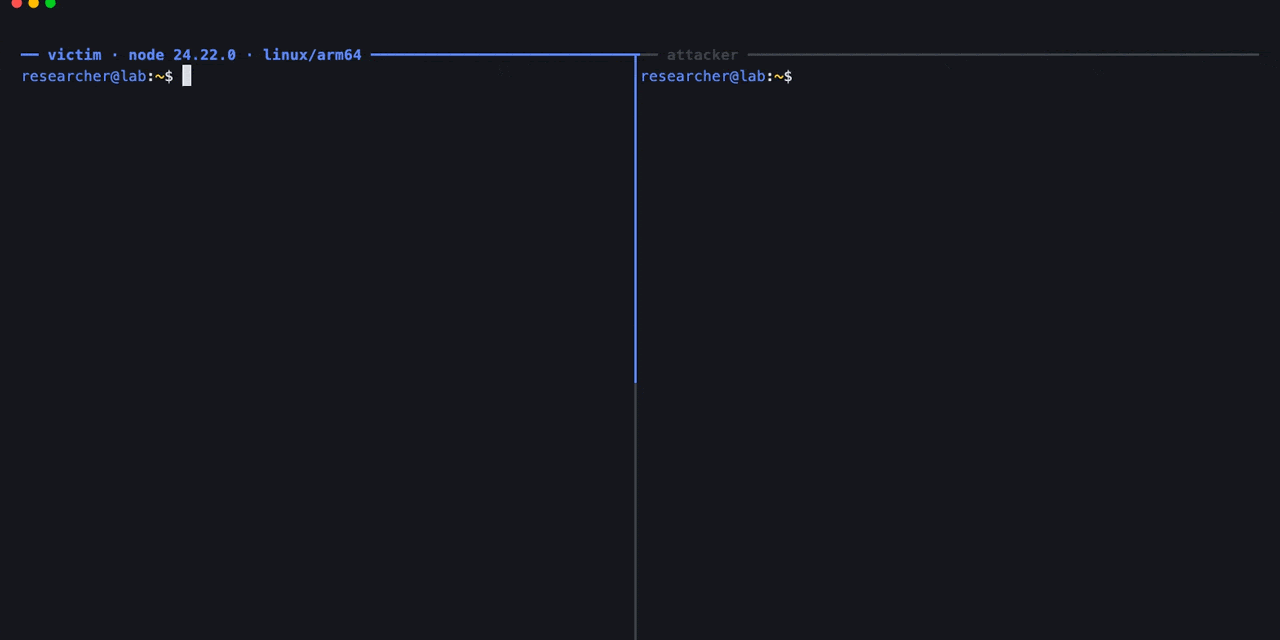
At the core of the Node2Shell exploit is a vulnerability in the Brotli compression algorithm utilized by Node.js. Specifically, the researchers demonstrated remote code execution (RCE) by supplying maliciously crafted Brotli data to the Node.js bundled Brotli decoder. This attack took place on the official Node.js version 24.22.0 for Linux arm64, without requiring a debugger or any custom modifications to the build.
- Vulnerability Identified: The issue is registered as CVE-2026-111497.
- Execution Environment: The successful execution of the malicious code was achieved on a standard Node.js build.
- Impact: This demonstrates a significant security risk for all applications relying on Node.js, particularly for users on the arm64 architecture.
Understanding Brotli Compression in Node.js
Brotli is a compression algorithm developed by Google, primarily aimed at serving compressed web content. It is widely used due to its effectiveness in reducing bandwidth and improving load times. However, the inclusion of Brotli in Node.js renders applications susceptible to exploitation if any flaws exist within the decoding process.
The Node.js team and security experts are now facing the critical task of addressing this newly uncovered vulnerability, as it raises questions about the stability and security of applications that heavily rely on this compression standard.
Implications for Developers and Organizations
The discovery of the Node2Shell exploit carries significant ramifications for developers and organizations using Node.js. Immediate actions must be taken to understand and mitigate the risk posed by this vulnerability:
- Review Security Posture: Developers should conduct thorough security audits on their applications built on Node.js, particularly those that handle Brotli data.
- Update Dependencies: Regularly updating Node.js and its associated libraries is essential to guard against emerging threats.
- Implement Monitoring: Organizations should consider implementing better monitoring and intrusion detection systems to catch any unusual behavior stemming from this vulnerability.
Official Response and Future Outlook
In light of the exploit demonstration, the Node.js development team has acknowledged the vulnerability and is expected to release patches and updates to mitigate the risk. The cybersecurity community anticipates that soon there will be more technical details released regarding the exploit, enabling developers to understand better the nature of the vulnerabilities and the measures necessary to secure their applications.
The situation highlights the cat-and-mouse game between technology developers and security researchers, showcasing how even widely adopted platforms like Node.js remain fraught with potential security pitfalls.
Conclusion
The Node2Shell exploit underscores the necessity for continuous vigilance in software security practices, particularly for open-source platforms like Node.js. As threats evolve, so too must the strategies employed to combat them. Developers and organizations need to remain proactive in understanding these vulnerabilities and applying appropriate security measures.
Source: thehackernews.com