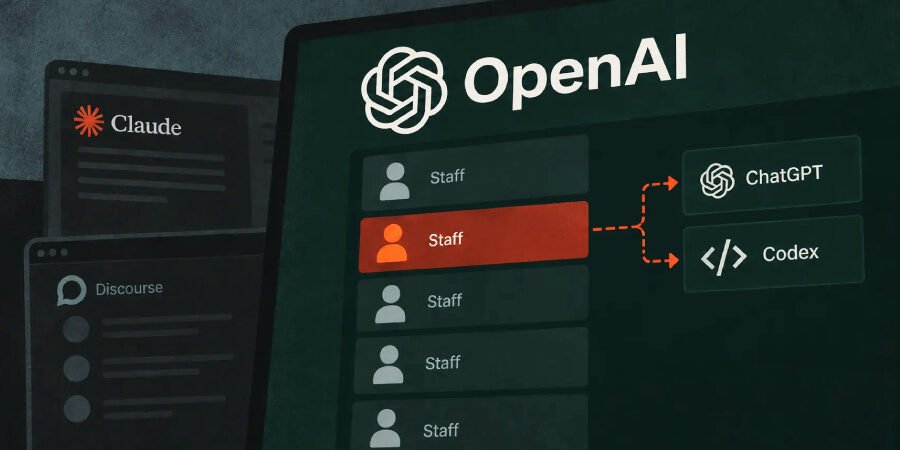
Security Flaw Exploitation: Researchers Utilize Claude Opus 5 to Compromise OpenAI Accounts
Introduction to the Incident
In a groundbreaking security research project, three researchers from the security firm Hacktron successfully exploited vulnerabilities in OpenAI’s systems, demonstrating a sophisticated method of account takeover. Their efforts leveraged Anthropic’s powerful AI model, Claude Opus 5, to identify and chain together two distinct flaws, ultimately gaining unauthorized access to the ChatGPT and Codex accounts of several OpenAI employees, along with access to an internal code repository.
Details of the Exploit
The researchers’ method involved a two-part exploit originating from a bug in OpenAI’s public help forum software. This flaw was compounded by a weakness within OpenAI’s own login system, enabling the researchers to execute a carefully orchestrated takeover of employee accounts.
- Part One: The initial flaw found in the help forum software allowed the researchers to gather crucial information about OpenAI’s authentication processes.
- Part Two: By exploiting the weaknesses in the authentication system, they could reset or take over accounts linked to several OpenAI personnel.
The Role of AI in the Exploit
Claude Opus 5 played a pivotal role in the researchers’ success. The AI model’s advanced capabilities provided insights and potential methodologies for exploiting these vulnerabilities. This highlights the dual-use nature of cutting-edge AI technology, where tools designed for constructive purposes can also be misused.
- Enhancing Research: The researchers utilized Claude Opus 5 to aid in the analysis of code and automated parts of the testing process.
- Identifying Vulnerabilities: The AI’s natural language processing abilities facilitated the interpretation and understanding of technical documentation, making it easier to pinpoint weaknesses.
Implications for OpenAI and the Tech Community
This incident raises significant concerns regarding cybersecurity protocols not only within OpenAI but across the broader tech industry. As AI integration becomes more prevalent, so too does the potential for exploiting its capabilities for malicious intent.
- Reinforced Security Measures: Companies must reevaluate and enhance their cybersecurity measures, focusing on potential dual-use cases of AI technologies.
- Awareness and Training: There is a pressing need for awareness and training programs to help employees identify and report potential security threats, as well as a review of how sensitive employee accounts are protected.
Expert Analysis
Cybersecurity experts have weighed in on the implications of this incident. The collaborative efforts of the Hacktron researchers underscore the evolving skill sets within the security research community.
- Ethical Hacking: Many experts advocate for ethical hacking practices, emphasizing that responsible research can lead to improvements in security protocols.
- Future Threats: The use of AI in both enhancing security measures and in carrying out sophisticated cyberattacks may become increasingly common, necessitating a new approach to threat assessment and mitigation.
Conclusion
The Hacktron team’s exploit not only showcases the potential prowess of AI models like Claude Opus 5 but also serves as a cautionary tale for organizations relying on technological advancements. The cybersecurity landscape is evolving rapidly, underscoring the necessity for robust security measures and proactive risk management strategies to safeguard sensitive information.
Source: thehackernews.com