Increased Passkey Phishing Threats Target Microsoft Cloud Accounts
Introduction to the Cyber Threat
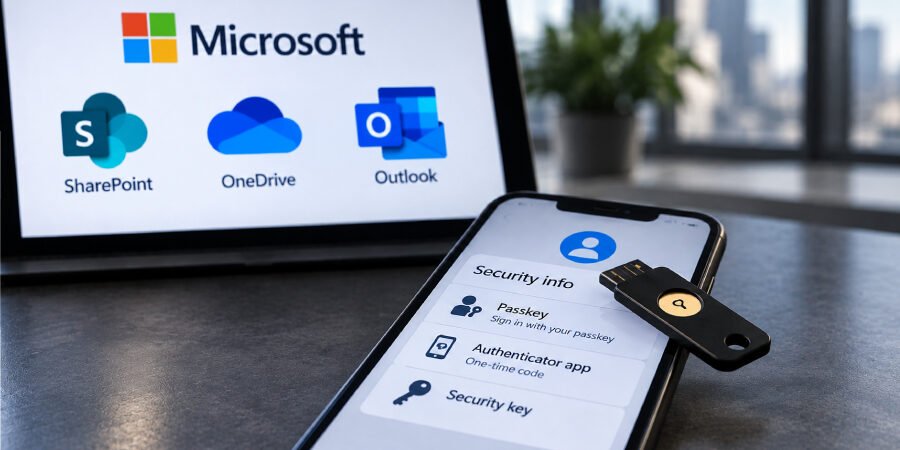
Microsoft has recently revealed critical insights about two alarming phishing campaigns that leverage passkey-themed social engineering tactics. These attacks are specifically aimed at infiltrating Microsoft cloud accounts, leading to potential financial fraud and data exfiltration. The sophistication of these methods raises significant concern given the growing reliance on cloud services in business operations.
Details of the Phishing Campaigns
The first of these campaigns took place from August 3 to 5, 2026, during which over one million scam emails were dispatched. Cybercriminals cleverly disguised their messages as communications from CEOs, aiming to exploit the trust that comes with such authority. This tactic is part of a broader trend where attackers employ legitimate-looking emails to deceive recipients, facilitating unauthorized access to sensitive information.
Mechanisms of Attack
- Email Spoofing: Attackers use third-party email delivery systems to mask their true identities, making their phishing emails appear credible and urgent.
- Passkey-Themed Social Engineering: By focusing on passkeys, which are increasingly used for secure authentication, attackers capitalize on users’ familiarity with these tools to lower their guard.
- Financial Fraud and Data Exfiltration: The ultimate goal of these attacks is not only to steal login credentials but also to siphon sensitive data from compromised cloud accounts.
Implications for Businesses and Users
As these phishing tactics evolve, the implications for businesses and individual users become increasingly severe. The reliance on cloud infrastructure for daily operations means that a successful breach can lead to significant financial losses, compromised personal data, and a tarnished corporate reputation.
Organizations must be particularly vigilant, given that many employees may not be fully aware of the nuances of phishing attacks or the specific risks associated with passkeys. This awareness gap can serve as an entry point for attackers, making cybersecurity education paramount.
Expert Analysis and Recommendations
Security experts emphasize the necessity of implementing robust cybersecurity measures to combat these phishing threats. Recommendations include:
- Enhanced Training: Regular training sessions for employees on recognizing phishing attempts and suspicious emails can greatly reduce the risk of successful attacks.
- Two-Factor Authentication (2FA): Implementing 2FA adds an additional layer of security, making it more difficult for attackers to gain unauthorized access.
- Continuous Monitoring: Organizations should invest in monitoring solutions to detect unusual activity that may indicate a breach in real-time.
Conclusion
As the threat landscape continues to evolve, understanding and mitigating the risk of advanced phishing attacks has never been more critical. The use of passkey-themed social engineering represents a sophisticated new frontier in cybercrime that organizations must proactively address to safeguard their cloud environments and sensitive data.
Source: thehackernews.com