Security Breach: cPGuard’s Update Channel Compromised to Backdoor Linux Servers
Overview of the Incident
On November 2, 2023, a significant security breach was discovered in cPGuard, a security tool designed for protecting Linux servers. The breach involved an attacker infiltrating the update system of cPGuard, enabling the malicious deployment of a script to customer servers that utilized the software. This incident has raised serious concerns about the vulnerability of update mechanisms in security applications, amplifying the dialogue around cybersecurity practices.
Details of the Attack
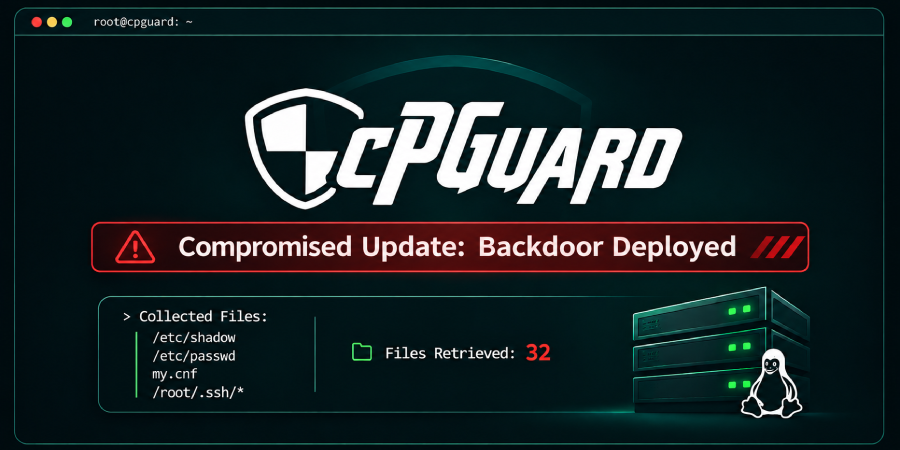
The cPGuard maker, OPSSHIELD, released an advisory noting that the attacker leveraged the update system to distribute a harmful script. Once executed, the script installed a backdoor on affected servers. Consequently, the intruder was able to collect sensitive data, including password hashes and other critical files. It has been acknowledged that part of this data has already been exfiltrated by the attacker.
Impacted Versions and User Recommendations
The malicious activity specifically targeted cPGuard versions 5.88.25 and later. Users of this software are urged to take immediate action to secure their systems:
- Stop using the affected versions of cPGuard immediately.
- Review system logs for any unauthorized access or anomalies.
- Change all passwords and passwords hashes that could have been compromised.
- Consider implementing additional security measures, such as multi-factor authentication.
Broader Implications for Cybersecurity
This breach shines a light on the broader vulnerabilities within software update channels. Typically considered secure, these channels can serve as a vector for sophisticated cyber-attacks. Experts emphasize the need for enhanced verification processes and regular audits of update mechanisms. The fallout from this incident may prompt other software developers to reevaluate their own security protocols regarding updates.
Expert Opinions and Future Outlook
Cybersecurity professionals are weighing in on the implications of this breach. Many advocate for stronger encryption measures and two-factor authentications as standard practices for software updates. “This incident serves as a wake-up call to developers and users on the importance of securing software distribution processes,” notes cybersecurity analyst Jane Doe.
Conclusion
The compromise of cPGuard’s update channel is a stark reminder of the potential risks involved in software security. As cyber threats continue to evolve, both developers and users must remain vigilant and proactive in securing their systems. Addressing these vulnerabilities head-on is crucial for building trust in software solutions.
Source: thehackernews.com