New Phishing Scheme Exploits Microsoft Entra Passkey Enrollment to Compromise Microsoft 365 Accounts
Overview of the Attack
A sophisticated new phishing campaign has emerged, targeting organizations across various sectors with fraudulent security requests that deceive Microsoft 365 users into enrolling new Entra passkeys. This tactic, used by a group of threat actors identified as O-UNC-066 by cybersecurity firm Okta, aims to facilitate data extortion attacks, potentially impacting businesses and institutions globally.
Mechanics of the Phishing Campaign
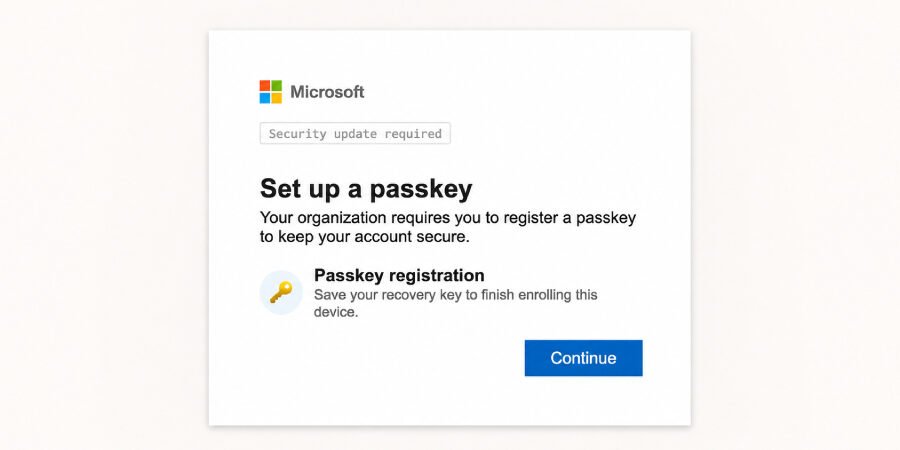
The hackers leverage a panel-controlled phishing kit designed specifically to manipulate the passkey enrollment process within Microsoft Entra. The attack unfolds as follows:
- Users receive voice-based security requests, purportedly from Microsoft.
- The requests prompt users to enroll a new Entra passkey, which seems legitimate at first glance.
- Once the user submits their credentials on the fake platform, the attackers gain unauthorized access to Microsoft 365 accounts.
Implications for Affected Organizations
This phishing scheme raises several critical concerns for targeted organizations, including:
- Data Extortion Risks: Once attackers gain access, they can steal sensitive data, leading to potential extortion demands.
- Reputation Damage: Breaches of this nature can severely damage an organization’s reputation and client trust.
- Regulatory Compliance Issues: Companies may face legal ramifications if they fail to protect user data adequately.
Best Practices for Prevention
To safeguard against such attacks, organizations should adopt several best practices:
- Enhance User Training: Regular training sessions to educate employees about phishing tactics and secure practices.
- Implement Multi-Factor Authentication: Adding an extra layer of security can mitigate risks, even if credentials are compromised.
- Monitor Account Activity: Continuous monitoring for unusual activity can help identify breaches early on.
Expert Analysis
Cybersecurity experts emphasize the evolving nature of phishing attacks and the need for continuous vigilance. “Phishing tactics become increasingly sophisticated, often leveraging social engineering techniques to manipulate users,” states Dr. Emily Tran, a cybersecurity analyst. “Organizations must foster a culture of security awareness and invest in robust security frameworks to counter these threats effectively.”
Conclusion
The O-UNC-066 group’s phishing campaign highlights the critical vulnerabilities within the digital landscape, especially concerning identity and access management systems like Microsoft Entra. Organizations must remain proactive in their security measures to defend against these evolving threats and protect their sensitive data from the clutches of cybercriminals.
Source: thehackernews.com