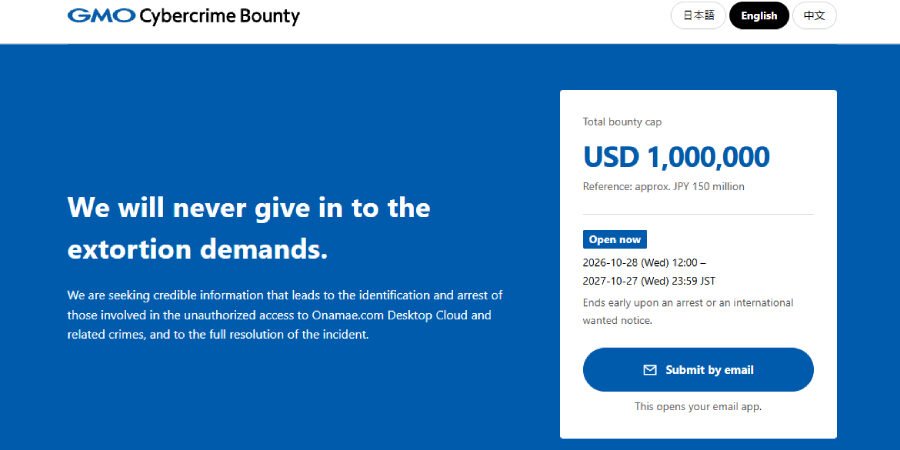
Japan’s GMO Offers $1 Million Bounty to Capture FX Trading Cloud Hackers
Background and Context
Japan’s cyber landscape has been increasingly marred by high-profile breaches, with the recent attack on GMO Internet Group’s Onamae.com Desktop Cloud service representing a significant escalation in the threat landscape. This incident is particularly concerning as it targets the financial sector, specifically foreign exchange (FX) trading, which has been a lucrative target for cybercriminals due to its high-value transactions and sensitive data. The decision by GMO to offer a $1 million bounty for tips leading to the capture of these hackers underscores the severity of the situation and the company’s commitment to safeguarding its users’ data and services.
Historically, Japan has faced various cyber incidents, but the trend has intensified in the past few years. For instance, the 2020 breach of the Tokyo-based Mitsubishi Electric Corp. exposed sensitive information and highlighted vulnerabilities in the nation’s cybersecurity posture. The Onamae.com breach marks a concerning development, especially as Japan prepares to host significant international events that could attract more cyber threats. The refusal to pay the extortion demand indicates a strategic shift toward resilience and proactive engagement with the community to combat cybercrime, rather than succumbing to ransom demands.
This incident also sheds light on the broader implications for cybersecurity in Asia, where financial institutions have become prime targets for state-sponsored actors and organized crime. The rise of ransomware attacks and the increasing sophistication of cybercriminals necessitate a reevaluation of security measures across all sectors, especially in Japan, which has historically been considered a safe haven in terms of cybersecurity.
Technical Analysis
The breach of GMO’s Onamae.com service appears to have exploited a combination of social engineering tactics and vulnerabilities within their infrastructure. While specific technical details remain scant, it is likely that the attackers employed phishing schemes to gain initial access, potentially using fake emails that mimicked legitimate communications. Once inside, they may have leveraged existing security weaknesses to escalate privileges, allowing them to access sensitive data and potentially deploy ransomware or other malicious payloads.
A common tactic in such breaches is the use of **credential stuffing**, where attackers utilize stolen credentials from previous data breaches to gain access to user accounts. Given the service’s focus on FX trading, this could have provided the attackers with immediate access to high-value accounts, leading to compromised trading operations and financial losses for users. The sensitive nature of the data hosted on these platforms amplifies the risks, making it imperative for organizations to enforce multi-factor authentication (MFA) and robust access controls.
Additionally, the attackers likely employed **data exfiltration techniques** to siphon off sensitive information before making an extortion demand. This could involve the use of encrypted channels to evade detection while transferring stolen data to remote servers. The incident serves as a stark reminder of the evolving tactics used by cybercriminals, necessitating continuous vigilance and adaptation from organizations like GMO.
Scope and Real-World Impact
The breach has far-reaching implications for the affected users, which primarily include traders and financial institutions relying on the Onamae.com service for their operations. As the service hosts Windows desktops specifically used for FX trading, compromised accounts could lead to significant financial losses, not only for individual traders but also for larger financial institutions that may rely on the integrity and security of such services.
Comparatively, this incident echoes the 2016 breach of the Bangladesh Central Bank, where attackers exploited vulnerabilities in SWIFT systems to steal $81 million. Both incidents highlight the catastrophic potential of cyberattacks in the financial sector, emphasizing the need for improved cybersecurity defenses. The Onamae.com breach serves as a reminder that even established and reputable companies are not immune to cyber threats, and the ramifications can be severe and widespread.
Moreover, the incident may shake consumer confidence in cloud-based services for financial transactions, urging users and organizations to reconsider their data security practices. As the financial landscape becomes increasingly digitized, maintaining trust is crucial for sustaining business operations.
Attack Vectors and Methodology
- The attackers conducted reconnaissance to identify potential vulnerabilities in the Onamae.com infrastructure.
- Phishing emails were likely used to trick employees into revealing credentials or clicking on malicious links.
- Once access was gained, they employed privilege escalation techniques to access sensitive data.
- Data exfiltration methods were utilized to transfer stolen data to external servers securely.
- An extortion demand was made once the attackers had sufficient data to threaten the company.
Mitigation and Defense Recommendations
Organizations must adopt proactive measures to defend against such attacks. Here are some actionable recommendations:
- Implement multi-factor authentication (MFA) for all user accounts to add an additional layer of security.
- Regularly update and patch systems to protect against known vulnerabilities.
- Conduct regular security awareness training for employees to recognize phishing attempts and other social engineering tactics.
- Establish an incident response plan that includes clear protocols for communication and recovery following a breach.
- Implement advanced threat detection systems that monitor for unusual activities and potential data exfiltration.
Industry Implications and Expert Perspective
The breach at GMO signals a growing trend in the financial sector where cybercriminals are increasingly targeting critical infrastructure. Experts predict that as financial institutions continue to digitize their operations, the sophistication of attacks will only increase. This incident could serve as a catalyst for regulators to enforce stricter cybersecurity standards across the industry, prompting organizations to prioritize cybersecurity investments.
Furthermore, the bounty offered by GMO could inspire other companies to adopt similar strategies, creating a community-driven approach to combating cybercrime. However, this approach also raises ethical questions surrounding the incentivization of reporting cybercriminals and the potential for false tips. The long-term implications of such bounty programs will need careful consideration as the cybersecurity landscape evolves.
Conclusion
The recent breach of GMO’s Onamae.com service is a severe reminder of the vulnerabilities inherent in the financial sector’s reliance on digital platforms. As cyber threats continue to grow in sophistication, organizations must remain vigilant and proactive in their defense strategies. The decision to offer a $1 million bounty for information leading to the capture of the attackers reflects a robust commitment to cybersecurity, but it also highlights the urgent need for systemic change in how companies approach cybersecurity threats. As the landscape evolves, the collective responsibility of organizations, regulators, and users will be paramount in fostering a safer digital environment.
Original source: thehackernews.com