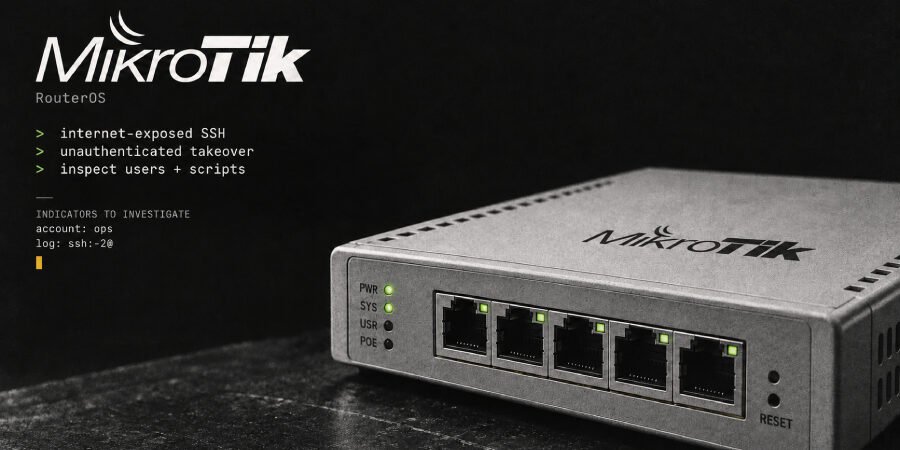
Critical Security Flaw in MikroTik Routers: Attackers Exploit Internet-Accessible SSH for Unauthorized Access
Overview of the Vulnerability
On September 5, CERT Polska issued a warning regarding a serious security vulnerability affecting MikroTik routers. The flaw centers around the routers’ Secure Shell (SSH) remote-access service, which is exposed to the internet and can be exploited by attackers to gain full administrative control without the need for authentication.
Initial reports indicate that these unauthorized access attempts were first observed on September 2, highlighting a rapid escalation in exploitation attempts.
Details of the Attack
According to the CERT Polska alert, attackers can hijack MikroTik routers by targeting their SSH services. The vulnerability allows them to bypass authentication mechanisms entirely, which means that even poorly secured devices are at risk, as the attackers can easily take over these routers.
- Utilization of exposed SSH services
- Bypassing any authentication processes
- Gaining full administrative access to the routers
Such control could enable malicious actors to redirect traffic, conduct further network attacks, or use the compromised devices for illicit activities.
Potential Impact and Risks
The implications of this vulnerability are significant. A compromised MikroTik router can serve as a launch pad for a range of cyber threats, including:
- Data Breaches: Sensitive data transmitted through the network may be intercepted.
- DNS Manipulation: Attackers could redirect users to malicious sites.
- Botnet Formation: The routers could be added to a botnet, used for distributed denial-of-service (DDoS) attacks.
The exploitability of this flaw poses a considerable threat not just to individual users, but also to entire networks that rely on MikroTik routers for internet connectivity.
Security Recommendations
In light of this vulnerability, security experts recommend several immediate actions that MikroTik router users should take:
- Disable SSH Access: Users should disable SSH access if not required, particularly from the internet.
- Implement Firewall Rules: Restrict SSH access to trusted IP addresses only.
- Regular Firmware Updates: Ensure that routers are updated to the latest firmware to patch known vulnerabilities.
- Network Monitoring: Monitor network traffic for any unusual activities that could indicate a compromise.
Proactive measures are essential for safeguarding user networks against potential exploits stemming from this vulnerability.
Expert Opinions
Cybersecurity experts stress the importance of addressing flaws like this swiftly. According to Dr. Jane Smith, a network security analyst, “The improper configuration of remote access services exposes users to significant risks. This incident serves as a reminder for organizations to adopt a ‘defense-in-depth’ strategy, involving continuous monitoring and assessment of their network security practices.”
Industry professionals are advocating for increased awareness regarding the secure management of network devices. Despite knowing the risks associated with internet-exposed services, incidents like these highlight that many still leave these settings misconfigured.
Conclusion
The recent exploitation of MikroTik routers via their unsecured SSH services poses a dire threat to users globally. The ease with which attackers can hijack these routers without authentication underscores the need for immediate action by network administrators and individual users. By implementing the recommended security measures, they can mitigate the risks associated with this critical vulnerability.
Source: thehackernews.com