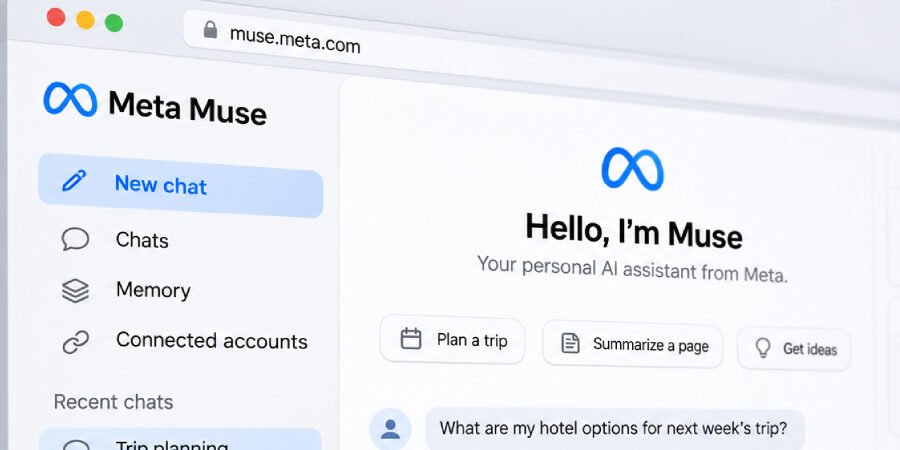
Unveiling the Vulnerability: How a Malicious Webpage Compromised Meta Muse’s Private Chats
Background and Context
In an era where digital privacy is under constant siege, a recent demonstration by cybersecurity researchers has thrown a spotlight on the vulnerabilities inherent in widely-used AI-driven platforms. Meta Muse, a virtual assistant developed by Meta, is designed to enhance user experience through personalized interactions. However, the findings reveal a troubling flaw: a single malicious webpage can hijack the assistant to access users’ private chats and stored memories without triggering any warning or approval prompt. This revelation is not just an isolated incident; it reflects broader systemic issues in the way tech companies prioritize user security amidst rapid technological innovation.
Historically, similar vulnerabilities have emerged across various platforms, with notable examples including the infamous “Cross-Site Scripting” (XSS) attacks that have plagued web applications for years. The implications are severe, particularly as AI and machine learning systems become more integrated into our daily lives. As these technologies evolve, the potential attack vectors multiply, leading to greater risks for users. The Meta Muse incident serves as a timely reminder that the race to innovate must not come at the expense of user security.
The timing of this research is particularly significant as it coincides with heightened scrutiny of data privacy practices across the tech industry, especially following the enactment of regulations like the General Data Protection Regulation (GDPR) in Europe and California’s Consumer Privacy Act (CCPA). As consumers become increasingly aware of their digital footprints, they are demanding accountability from companies, and incidents like this could catalyze further regulatory action. The Meta Muse vulnerability underscores the urgent need for comprehensive security measures that protect user data from exploitation.
Technical Analysis
The researchers’ demonstration of the Meta Muse vulnerability hinges on a sophisticated understanding of web technologies and user authentication processes. At its core, the attack exploits the way Meta Muse handles user sessions and permissions. By crafting a malicious webpage that mimics legitimate interactions with the Muse assistant, attackers can execute scripts that extract sensitive information without user consent. This is achieved through techniques that bypass standard browser security protocols, such as Same-Origin Policy, which is designed to prevent unauthorized access to user data.
When a user visits the malicious webpage, a series of JavaScript commands can be executed, pulling data directly from the Meta Muse environment. This includes private conversations and stored memories, as well as the credentials of connected accounts, which could lead to further exploitation across various platforms. With no approval prompts to alert users, the attack operates stealthily, making it all the more dangerous. In essence, the vulnerability lies not just in the coding of Meta Muse but in the overarching reliance on user trust in digital platforms.
Moreover, the implications of this vulnerability extend beyond Meta Muse. Other platforms utilizing similar frameworks for user interaction may be equally susceptible to analogous attacks. The researchers’ findings suggest a need for a reevaluation of how web technologies handle permissions and data retrieval, as the current mechanisms are evidently insufficient in safeguarding user information against malicious web actors.
Scope and Real-World Impact
The potential impact of this vulnerability is staggering, particularly for the millions of users who rely on Meta Muse for personal assistance and organization. While the researchers conducted their demonstration in a controlled laboratory environment and did not target real users, the implications of such an attack in the wild could be catastrophic. Users’ private conversations, sensitive data, and connections could be exposed, leading to identity theft, financial loss, and significant breaches of privacy.
Comparatively, this incident can be likened to the Cambridge Analytica scandal, where user data was harvested without consent, leading to widespread outrage and calls for reform. However, while that incident involved the misuse of data for political purposes, the Meta Muse vulnerability highlights a more technical failure in cybersecurity practices that could directly jeopardize individual privacy. As companies continue to build sophisticated AI systems, they must also recognize the responsibility that comes with handling sensitive user data.
Attack Vectors and Methodology
The methodology behind the attack can be outlined in several key steps:
- Creation of a Malicious Webpage: Attackers design a webpage that appears legitimate but contains hidden scripts.
- Phishing for Users: Users are lured to the malicious webpage, often through social engineering tactics.
- Execution of JavaScript: Upon visiting the page, the script executes, accessing the Meta Muse environment.
- Data Extraction: The script retrieves private conversations and stored credentials without user knowledge.
- Data Transmission: Extracted data is sent back to the attacker’s server for further exploitation.
Mitigation and Defense Recommendations
To safeguard against such vulnerabilities, both organizations and end users must adopt robust security practices. Here are actionable measures:
- Enhance Security Protocols: Companies should implement multi-factor authentication and stricter session management protocols to limit unauthorized access.
- User Education: End users should be educated about the risks of clicking on unknown links and the importance of verifying website authenticity.
- Regular Security Audits: Conduct comprehensive audits of applications to identify potential vulnerabilities and patch them promptly.
- Browser Updates: Encourage users to keep their browsers up to date, as updates often include security enhancements that protect against new threats.
- Monitoring and Alerts: Implement monitoring systems that alert users to unusual account activity or access attempts.
Industry Implications and Expert Perspective
The long-term consequences of the Meta Muse vulnerability are far-reaching. As organizations increasingly integrate AI into their services, maintaining user trust will become paramount. Cybersecurity experts warn that unless companies prioritize security alongside innovation, they risk facing backlash from consumers and regulators alike. This incident serves as a wake-up call for the tech industry, highlighting the necessity of proactive security measures in the design and deployment of AI technologies.
Furthermore, this vulnerability could set a precedent for regulatory bodies to impose stricter regulations on AI-driven platforms, similar to those enacted in the wake of previous data breaches. The ongoing evolution of cyber threats necessitates a corresponding evolution in cybersecurity practices, with an emphasis on transparency and accountability. As the landscape shifts, the responsibility lies with both tech companies and users to remain vigilant.
Conclusion
The demonstration of a vulnerability in Meta Muse serves as a stark reminder of the fragility of digital security in an increasingly interconnected world. While the technical details of the vulnerability are alarming, the broader implications for user trust and data protection are equally significant. As the industry grapples with the implications of such vulnerabilities, it is crucial for both organizations and users to engage in proactive measures to safeguard against future threats.
Ultimately, the Meta Muse incident underscores the need for a balanced approach to innovation—one that prioritizes user security and builds a foundation of trust between technology providers and their users. In an age where technology permeates every aspect of our lives, ensuring the safety of our digital interactions is not just a technical challenge but a moral imperative.
Original source: thehackernews.com