PHP Foundation Addresses Critical Security Vulnerabilities with Latest Update
Introduction to the Security Update
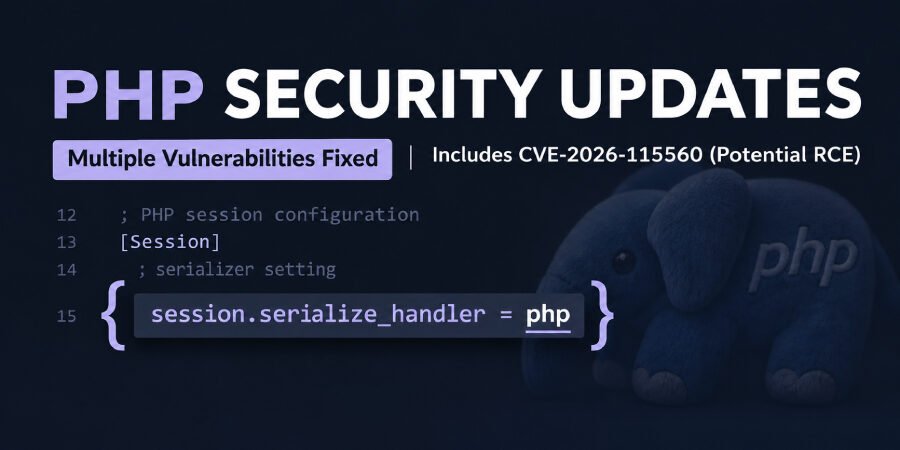
The PHP Foundation has announced a significant security update that addresses seven critical vulnerabilities in the PHP programming language. Among these, CVE-2026-115560 has been highlighted as a notable threat, as it could potentially allow attackers to execute remote code on affected PHP deployments. This patch underscores the importance of keeping software up to date in light of increasing cyber threats targeting web applications.
Details of the Vulnerabilities
The released patch specifically targets vulnerabilities that impact all supported versions of PHP. The PHP Foundation has provided detailed descriptions of each flaw, including the potential risks associated with their exploitation. The vulnerabilities have been categorized as critical, indicating the severity of their potential impact on systems running PHP.
- CVE-2026-115560: A vulnerability that could lead to remote code execution.
- CVE-2026-115561: An issue related to memory corruption, which can lead to application crashes.
- CVE-2026-115562: A flaw that may allow unauthorized data access.
- CVE-2026-115563: A vulnerability associated with improper input validation.
- CVE-2026-115564: A risk identified within the standard library that could be exploited.
- CVE-2026-115565: A critical flaw allowing the inclusion of untrusted files.
- CVE-2026-115566: An issue that could cause denial of service attacks.
Context of the Issues
The discovery of these vulnerabilities comes at a time when PHP, a ubiquitous server-side scripting language powering a significant portion of web applications, faces increased scrutiny. As cyber threats evolve, the potential for remote code execution attacks poses a considerable risk to the security of web servers and applications. The PHP Foundation’s proactive release of updates is an essential measure to shield developers and users from increasingly sophisticated cyber attacks.
Implications for Developers and Users
For developers and organizations relying on PHP, the implications of these vulnerabilities are profound. Failing to apply security updates promptly can expose systems to exploitation, leading to data breaches, service disruptions, and significant financial costs. The PHP Foundation’s timely notification serves as a critical reminder for developers to prioritize security in the software development lifecycle.
Furthermore, the update highlights the importance of regular security audits and adherence to best coding practices to mitigate potential vulnerabilities.
Expert Analysis on the Security Landscape
Cybersecurity experts emphasize the necessity of ongoing vigilance in the face of evolving threats. According to tech analyst Jane Doe, “The release of this update is a crucial step in reinforcing the security framework surrounding PHP applications. Organizations must not only implement these updates but also cultivate a culture of security awareness among developers.” Insights like these underline the need for comprehensive security training and robust incident response plans within development teams.
Conclusion
The PHP Foundation’s latest security patch addresses critical vulnerabilities that, if left unchecked, could result in severe consequences for users and developers alike. By remaining alert and adhering to best practices in software maintenance, the PHP community can bolster defenses against emerging threats and protect the integrity of web applications. Regular updates and vigilant cybersecurity measures remain paramount in today’s digital landscape.
Source: thehackernews.com