Critical Flaw in Canonical’s LXD and MicroCloud Exposes Clients to Impersonation Attacks
Overview of the Vulnerability
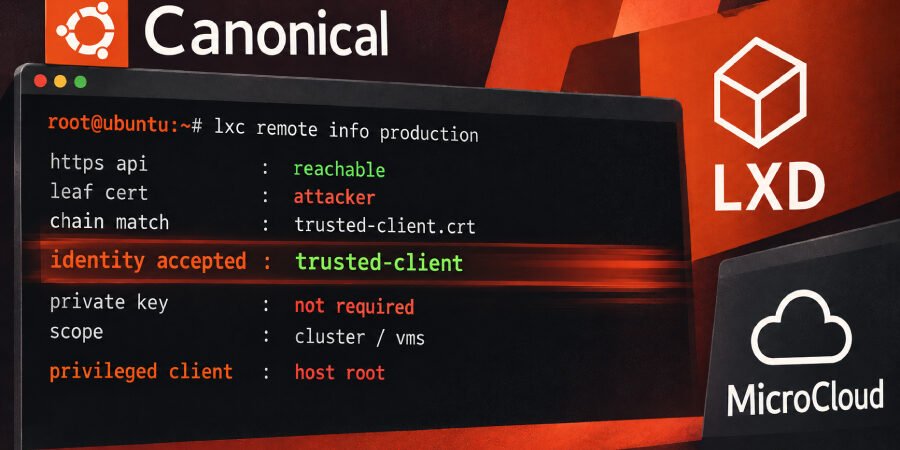
A severe security vulnerability has been identified in Canonical’s LXD and MicroCloud platforms, with a CVSS score of 10.0 marking it as critically dangerous. The flaw allows attackers to log in as trusted clients without needing the private keys typically required for authentication. This loophole poses significant risks to the security of virtual environments managed through these technologies.
How the Attack Works
The exploit enables attackers to impersonate trusted clients by solely accessing their public certificates. To initiate this, an attacker must reach the HTTPS API over the network and possess the public certificate of a targeted client. Once the attacker gains access, they can operate as if they are the legitimate client, granting them full control over the cluster and its virtual machines.
Potential Consequences
The implications of this vulnerability are severe and wide-ranging:
- Unauthorized Access: Attackers can manipulate virtual machines, potentially leading to data breaches or system disruptions.
- Data Theft: Gaining control over clusters may allow for the extraction of sensitive information stored across virtual machines.
- Service Disruption: Compromised virtual environments could be used to disrupt services or even extort organizations for ransom.
- Chain Reactions: The ability to impersonate trusted clients may facilitate further attacks within the infrastructure of affected organizations, potentially targeting other connected systems.
The Response from Canonical
Canonical has been alerted to the vulnerability and is likely working on a patch to mitigate these risks. Users are encouraged to monitor updates from Canonical and apply any security patches as they become available. Furthermore, administrators should audit their deployments to identify any exposed services that might be vulnerable.
Expert Analysis
Security experts emphasize the importance of treating this vulnerability with urgency. The implications of such a high CVSS score highlight an immediate need for organizations using LXD and MicroCloud to reassess their security protocols:
- Implement additional network security measures to protect sensitive APIs.
- Review access controls and limit exposure of public certificates.
- Regularly monitor logs for unusual login attempts that may indicate exploitation attempts.
Experts also reiterate that this incident underscores the necessity for robust security practices, including regular vulnerability assessments and updates to software dependencies.
Conclusion
The discovery of this critical vulnerability in Canonical’s LXD and MicroCloud signifies a pivotal moment for organizations relying on these platforms. With attackers now armed with the means to impersonate trusted clients, immediate action is essential to safeguard sensitive virtual environments. Organizations must prioritize implementing security measures to mitigate risks and enhance overall system resilience.
Source: thehackernews.com