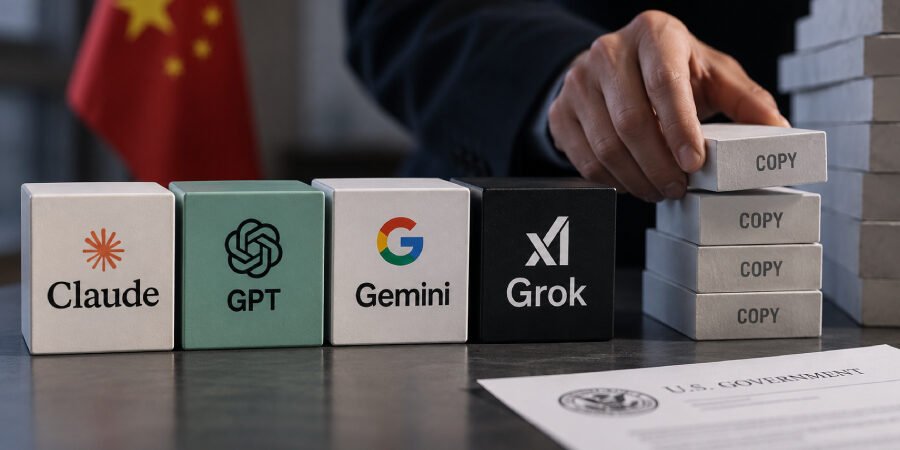
U.S. Cybersecurity Agencies Warn Against Chinese AI Firms’ Distillation Attacks on American Technologies
Overview of the Accusations
Recent statements from U.S. cybersecurity and intelligence agencies have raised significant concerns regarding the activities of China-based artificial intelligence (AI) firms. These agencies allege that these firms are engaging in systematic extraction of proprietary functionalities from prominent American AI models, including Claude, GPT, Gemini, and Grok. This tactic, referred to as “distillation attacks,” poses a serious threat to the integrity of U.S. technological advancements.
Understanding Distillation Attacks
Distillation attacks involve replicating or mimicking the capabilities of a machine learning model without direct access to its underlying architecture or datasets. By training their own models to approximate the performance of established systems, competitors can catch up without incurring the substantial research and development costs associated with creating technology from the ground up.
- Proprietary Information: The extraction of core functional abilities raises IP (intellectual property) concerns.
- Resource Allocation: It allows firms to advance rapidly while leveraging others’ investments in AI development.
- Competitive Edge: By utilizing distillation, these firms may gain access to cutting-edge technology that they could otherwise not replicate.
Implications for U.S. AI Industry
The implications of these allegations extend far beyond mere competition in the AI space. If true, the actions of these Chinese firms could undermine the foundational principles of innovation and meritocracy that drive the U.S. tech industry.
- Intellectual Property Theft: These allegations exemplify a broader trend of IP theft that could deter investment in innovative sectors.
- National Security Concerns: The potential for hostile takeover of proprietary technologies raises alarm in defense and cybersecurity sectors.
- Regulatory Responses: Increased scrutiny could lead to stricter regulations on technology transfer and collaborations with foreign entities.
Expert Insights
Experts in technology law and cybersecurity have weighed in on the situation, emphasizing the necessity for stronger defenses against such intellectual property encroachments. Legal scholars suggest the establishment of more robust frameworks that can deter such practices.
“This is not merely a technological race; it’s a battle for the future of innovation. If these attacks continue without adequate response, we risk losing our competitive advantage,” notes Dr. Amanda Chan, a cybersecurity expert.
Additionally, companies within the U.S. AI ecosystem are urged to reinforce their protective measures and conduct thorough audits of their technologies to prevent potential breaches of their proprietary systems.
The Global Landscape of AI Development
The accusations against Chinese AI firms occur amid a complex global landscape where nations compete aggressively in AI technology. As countries strive for technological supremacy, the need for robust cybersecurity measures has never been more paramount.
- International Collaboration: Countries may need to collaborate on intelligence-sharing regarding such threats.
- AI Regulations: A unified regulatory approach may help mitigate risks associated with cyber-espionage in AI.
- Future of AI Competition: This situation may reshape the rules of engagement in the AI technology race, influencing how AI firms conduct business globally.
Conclusion
The accusations from U.S. agencies against Chinese AI firms underscore a growing concern over intellectual property security in the realm of artificial intelligence. As these distillation attacks become more prevalent, the need for a coordinated response from U.S. stakeholders in both private and public sectors becomes increasingly vital to safeguard innovation and ensure a competitive edge in the global technology race.
Source: thehackernews.com