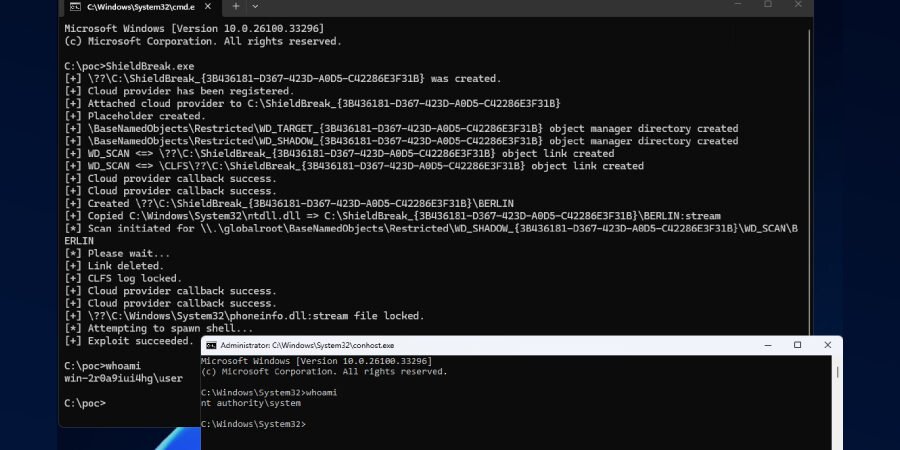
ShieldBreak: A New Zero-Day Vulnerability Bypasses Microsoft Defender with SYSTEM Access
Introduction to ShieldBreak
The cybersecurity landscape is once again facing a significant challenge with the emergence of a zero-day vulnerability known as ShieldBreak. Discovered by researcher Chaotic Eclipse, this vulnerability exploits flaws within Microsoft Defender for Windows. With a proof-of-concept (PoC) demonstration now made available, the implications of this development could have far-reaching consequences for both individual users and organizations relying on Microsoft’s security solutions.
Understanding the Vulnerability
ShieldBreak serves as a patch bypass for an existing vulnerability designated as CVE-2026-50656, also referred to as RoguePlanet. This particular vulnerability has been assigned a CVSS score of 7.8, categorizing it as critical and indicating that it can be exploited under certain conditions.
- Type of Vulnerability: The flaw lies within Microsoft Defender, the default antivirus solution provided by Microsoft for Windows operating systems.
- Patch Bypass: ShieldBreak effectively circumvents patches that were implemented to mitigate the RoguePlanet vulnerability.
- Impact Level: Cyber attackers could gain SYSTEM-level access if they successfully exploit this vulnerability, leading to potential full control over compromised systems.
Technical Breakdown of ShieldBreak
Chaotic Eclipse’s proof-of-concept highlights how ShieldBreak can be manipulated to achieve unauthorized access. The PoC allows attackers to bypass existing security mechanisms that are supposed to be safeguarding systems against RoguePlanet. One critical aspect of this vulnerability is the potential for exploitation without user interaction, which significantly increases the threat level.
“By leveraging this vulnerability, threat actors could establish a foothold in corporate networks before escalating their privileges to execute further attacks,” stated cybersecurity expert Lisa Chen.
Implications for Microsoft Defender and Users
The discovery of the ShieldBreak vulnerability raises several important questions and concerns:
- Increased Threat Surface: Organizations using Microsoft Defender must reassess their security posture in light of this vulnerability, which could lead to an increase in successful cyberattacks.
- User Trust: The ability of an established security product like Microsoft Defender to be bypassed presents significant reputational risks for Microsoft.
- Response Time: The cybersecurity community now anticipates swift action from Microsoft, requiring them to patch the vulnerability despite existing measures already being rendered ineffective.
Community Response and Recommendations
The cybersecurity community has responded to the ShieldBreak revelation with heightened concern. Security professionals are advising immediate protective measures to minimize risk, including:
- System Monitoring: Organizations should implement robust monitoring tools to detect any suspicious activities potentially linked to this vulnerability.
- Patch Management: Prioritize updating systems with the latest patches from Microsoft as they become available.
- Employee Training: Enhance security awareness training for employees to recognize potential phishing attempts that could exploit this vulnerability.
Conclusion
The emergence of the ShieldBreak zero-day vulnerability demonstrates the ongoing challenges in cybersecurity, particularly regarding widely used software like Microsoft Defender. As hackers continually search for new ways to exploit security flaws, it becomes crucial for organizations and users alike to remain vigilant and proactive in safeguarding their systems.
Source: thehackernews.com