New Trojanized npm Packages Unveil NullReceiver Tactic for Concealing C2 Server IPs in Blockchain
Introduction to the NullReceiver Tactic
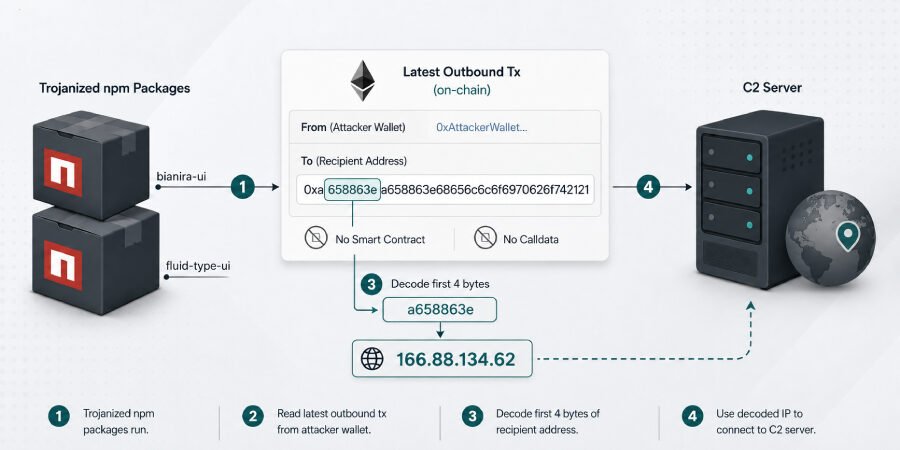
Cybersecurity researchers have identified a sophisticated evolution of the EtherHiding command-and-control (C2) mechanism within the realm of malicious software. This new method, known as NullReceiver, utilizes a unique approach to obfuscate the C2 server’s IP address by embedding it in a fictional destination address during empty Ethereum transactions. The tactic represents an innovative stride in evasion techniques employed by cybercriminals.
Discovery of Trojanized npm Packages
The recent scrutiny by cybersecurity experts has led to the discovery of two compromised npm packages—”bianira-ui” and “fluid-type-ui.” Both packages were found to utilize the NullReceiver methodology, raising alarms within the developer community and among security professionals.
- bianira-ui: A library purportedly designed for UI development, which is now tainted with malware.
- fluid-type-ui: Another UI toolkit that has been co-opted for nefarious purposes.
Understanding the NullReceiver Methodology
The NullReceiver tactic involves encoding the C2 server’s IP address within a seemingly inconsequential Ethereum transfer. This empty transaction acts as a ‘dead drop’ for the malware, making it difficult for traditional detection mechanisms to identify abnormal activities. Such a technique exploits blockchain technology’s inherent invisibility regarding transaction details when they do not involve actual transfers of value.
This method is particularly concerning for several reasons:
- Decentralization Advantage: Blockchain operates on a decentralized network, making it harder for authorities to trace origins and destinations of transactions.
- Weakness in Security Protocols: Many security solutions focus on conventional network traffic, failing to scrutinize interactions with blockchain networks.
- Increased Adoption of Blockchain: As blockchain technology becomes more prevalent, its potential exploitation by cybercriminals raises significant warnings for the future of cybersecurity.
Implications for Developers and Users
The emergence of such sophisticated techniques necessitates heightened vigilance among developers, as well as end-users who rely on npm packages for their projects. The fact that these packages were found in repositories where developers commonly source their tools exemplifies the risk associated with third-party dependencies:
- Dependency Safety: Developers must implement stringent security audits on their dependencies to prevent malicious infiltration.
- Community Awareness: Awareness programs emphasizing the importance of scrutinizing package origins and author credibility should be prevalent.
Expert Insights on Mitigating Risks
Experts underscore the importance of proactive measures to combat the threat posed by such tactics. Recommendations from cybersecurity analysts include:
- Implementing Code Reviews: Regular peer reviews of dependencies can help catch hidden malicious codes before they infiltrate main projects.
- Utilizing Static Analysis Tools: Software that analyzes code for potential vulnerabilities can provide an additional layer of security.
- Staying Informed: Keeping abreast of the latest cybersecurity trends and evolving tactics is crucial for both developers and security providers.
Conclusion
The NullReceiver tactic signifies a worrying trend in the battle against cybercrime, showcasing how innovative and adaptable threat actors can be. As the digital landscape continues to evolve, the challenge of securing software environments becomes increasingly complex. Both developers and users must remain vigilant and proactive in their cybersecurity efforts to thwart such emerging threats.
Source: thehackernews.com