Rethinking Managed Detection and Response in the Age of AI
The Evolution of Managed Detection and Response (MDR)
For much of the last decade, Managed Detection and Response (MDR) has been seen as a crucial solution for businesses struggling with cybersecurity. Faced with an increasing number of threats, organizations found it difficult to maintain around-the-clock security teams and hire sufficient analysts to manage the growing alert queue. As a result, MDR emerged as a viable alternative, enabling companies to outsource their security operations. The model worked effectively for a time, offering peace of mind and bolstering defenses against cyber threats.
The Changing Threat Landscape
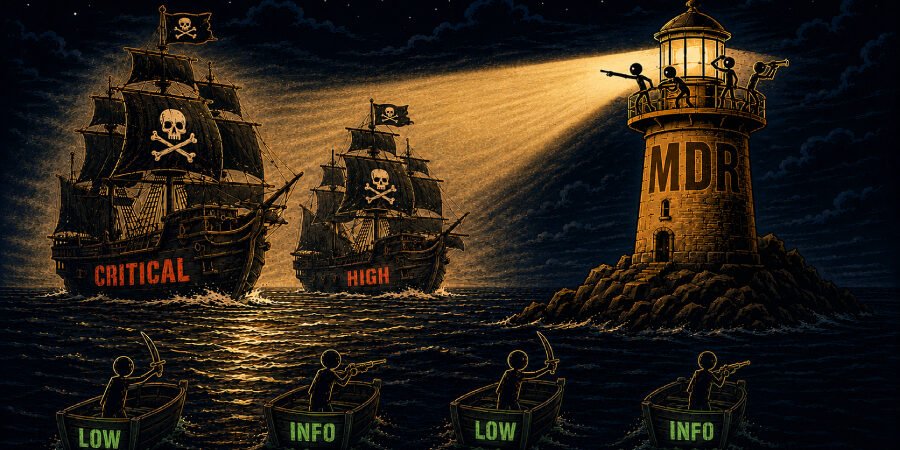
However, the cybersecurity landscape has rapidly evolved, often outpacing the capabilities of traditional MDR services. Attackers are now harnessing artificial intelligence (AI) to enhance their strategies, making operations faster and more sophisticated. This shift poses unique challenges for MDR providers, which may struggle to keep pace with the speed and complexity of AI-driven attacks.
AI: The Game Changer for Cyber Attackers
AI technologies are being utilized by cybercriminals in various ways, including:
- Automation of Attacks: Attackers can automate the process of reconnaissance and vulnerability scanning, reducing the time taken to execute an attack.
- Malware Development: AI algorithms can be leveraged to create more effective and evasive malware, increasing the chances of successful infiltrations.
- Social Engineering: AI is also aiding in crafting convincing phishing campaigns, as attackers can analyze user behaviors and tailor their approaches.
The Response from Security Defenders
As cyber threats have evolved, so too must the strategies employed by defenders. Experts suggest several ways that MDR services can adapt:
- Integrating AI in Defense: Just as attackers are using AI, so must defenders leverage machine learning to improve threat detection, analyze patterns, and reduce response times.
- Enhancing Collaboration: MDR providers and in-house teams need to work more closely to share insights and data, creating a more united front against attacks.
- Continuous Training: Cybersecurity personnel should engage in regular training to understand emerging technologies and tactics used by cyber adversaries.
Future Implications for MDR Services
The reliance on AI within the cybersecurity domain suggests a significant transformation in how MDR services will operate. Key considerations for the future include:
- Service Evolution: MDR services must evolve from reactive models to proactive approaches that anticipate and mitigate potential threats before they manifest.
- Investment in Technology: Increased investment in cutting-edge technologies will be essential for MDR providers to remain competitive.
- Regulatory Challenges: As AI becomes more prevalent in cybersecurity, regulators may impose new requirements, which will necessitate an adaptation in MDR service offerings.
Conclusion
As attackers become increasingly sophisticated through the utilization of AI, the traditional MDR model must be reevaluated and redefined. The partnership between AI technologies and cybersecurity evolving continues to reshape the landscape and will ultimately dictate how effectively organizations can safeguard their assets in the digital age.
Source: thehackernews.com