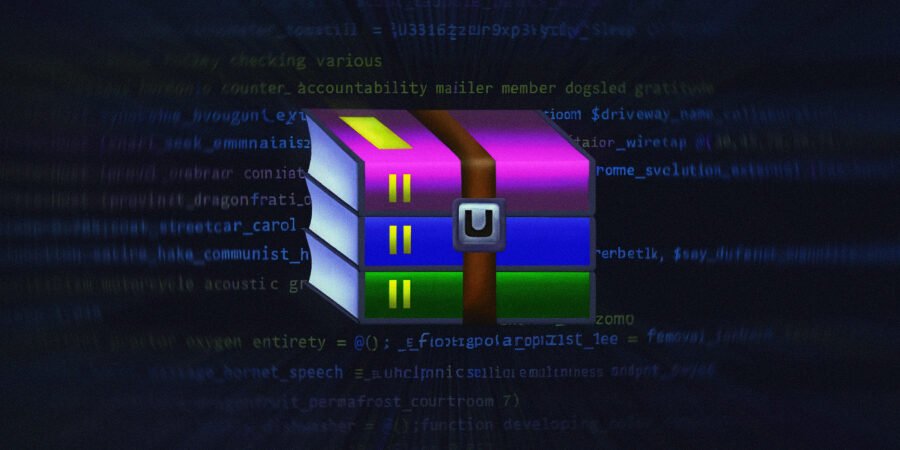
Exploitation of WinRAR Flaw by Russia-Aligned Cyber Groups Poses Threat to Ukraine
Background and Context
The ongoing conflict in Ukraine has not only been characterized by military engagements but also an escalating wave of cyber warfare. As geopolitical tensions rise, cyber-attacks have become a strategic tool, particularly for nation-state aligned groups targeting critical infrastructure. In this landscape, two prominent threat actors, Earth Dahu (also known as Gamaredon) and SHADOW-EARTH-066 (aka UAC-0226), have recently been attributed with exploiting a path traversal vulnerability in the widely-used file compression software WinRAR. This exploitation, which revolves around CVE-2025-8088, highlights a disturbing trend wherein longstanding vulnerabilities continue to be leveraged long after patches have been issued.
The significance of these attacks cannot be overstated, particularly as they come nearly a year after the initial vulnerability was patched. This raises troubling questions about the effectiveness of software updates and the resilience of organizations against persistent threats. The use of WinRAR, a staple application used for file compression and archiving, makes the impact of this flaw particularly pronounced, as it is widely integrated into various workflows across multiple sectors, including governmental and critical infrastructure in Ukraine.
This situation is reminiscent of past incidents where cyber adversaries exploited known vulnerabilities for malicious purposes. For instance, the 2017 WannaCry ransomware attack leveraged unpatched vulnerabilities in Microsoft Windows, resulting in widespread chaos. The current scenario underscores the necessity for organizations to remain vigilant even after patches are released, as cybercriminals often seek to exploit the delay in software updates among users to launch their attacks effectively.
Technical Analysis
The vulnerability identified as CVE-2025-8088 is a path traversal flaw that allows attackers to craft malicious files that can manipulate file path structures. When a user unwittingly extracts a compromised archive file, the flaw can be exploited to execute arbitrary code, leading to unauthorized access to the system. This exploitation is particularly dangerous in environments where users have elevated privileges, as it can facilitate deeper infiltration into networks.
In the case of Earth Dahu and SHADOW-EARTH-066, their modus operandi involves embedding malware payloads within seemingly innocuous compressed files. Once a user extracts these files, the malware, often designed to steal sensitive information, is executed. This technique is particularly effective in social engineering scenarios, where attackers may disguise malicious files as legitimate documents or updates.
The continuing exploitation of this flaw is a stark reminder of the cybersecurity landscape’s evolving threats. Attackers are not only using sophisticated techniques but are also leveraging social engineering to increase their chances of success. As organizations face mounting pressure to defend against such threats, understanding the underlying technical details of vulnerabilities like CVE-2025-8088 becomes paramount in developing robust defensive strategies.
Scope and Real-World Impact
The impact of these cyber-attacks has been significant, particularly for Ukrainian organizations that have been targeted. The compromised data often includes sensitive information related to government operations, defense strategies, and personal data of individuals. The fallout from these incidents can lead to not only financial losses but also a severe erosion of public trust in digital security measures.
Comparing this situation to previous high-profile attacks, such as the SolarWinds breach, it becomes evident that the implications of a single vulnerability can extend far beyond the immediate organizational impact. In the SolarWinds incident, attackers infiltrated numerous organizations, including federal agencies, highlighting how vulnerabilities can be exploited to gain access to expansive networks and data repositories.
Attack Vectors and Methodology
- Identification of the target organization, focusing on Ukrainian entities.
- Crafting malicious WinRAR archive files containing malware payloads.
- Disguising the files as legitimate documents to evade detection.
- Utilizing social engineering techniques to persuade users to download and extract the files.
- Exploiting the path traversal vulnerability upon extraction to execute the malware on the victim’s system.
- Establishing a foothold in the network to exfiltrate sensitive information.
Mitigation and Defense Recommendations
- Regularly update software applications and systems to ensure all known vulnerabilities are patched promptly.
- Implement strict access controls and privilege management to limit the potential impact of malware execution.
- Educate users about social engineering tactics, including the risks associated with downloading and extracting files from unknown sources.
- Utilize endpoint detection and response (EDR) solutions to identify and mitigate malicious activities in real time.
- Conduct regular security audits and penetration testing to identify and address vulnerabilities within the organization.
Industry Implications and Expert Perspective
The exploitation of the WinRAR vulnerability serves as a critical reminder of the persistent dangers in the cybersecurity landscape, particularly for organizations operating in high-stakes environments like Ukraine. As cyber warfare becomes increasingly normalized, the implications of such attacks extend beyond immediate disruptions to national security and economic stability.
Experts suggest that the industry must adopt a more proactive stance in addressing vulnerabilities, emphasizing the importance of not only timely patch management but also the development of a culture of security awareness. This includes fostering collaboration among organizations to share threat intelligence and best practices, ultimately enhancing collective resilience against evolving cyber threats.
Conclusion
The ongoing exploitation of the WinRAR flaw by Russia-aligned cyber groups underscores the critical need for vigilance in cybersecurity practices. As organizations continue to navigate an increasingly complex threat landscape, the lessons learned from such incidents must inform future defensive strategies. By prioritizing timely updates, user education, and robust security measures, organizations can better position themselves against the persistent threats posed by cyber adversaries.
Original source: thehackernews.com