Calendar Invites and Live Proxies: Unveiling a Google Session Hijacking Campaign
Background and Context
In an era where digital communication is the backbone of corporate collaboration, the emergence of sophisticated phishing operations presents a formidable challenge for organizations. Since mid-August 2026, a concerted effort to hijack Google sessions has been underway, targeting corporate users through an innovative blend of calendar invites and live proxies. This campaign, identified by Material Security’s Threat Research team, highlights the evolving tactics employed by cybercriminals to exploit trust in digital tools. As businesses increasingly rely on cloud-based platforms, the need for heightened vigilance and robust security measures has never been more critical.
Historically, phishing attacks have relied on recognizable tactics such as deceptive emails and malicious links. However, this latest campaign marks a significant evolution in methodology. The attackers have designed an approach that bypasses traditional security checks, making it difficult for even seasoned defenders to identify the threat. This is a worrying trend, as it demonstrates a growing sophistication among cyber adversaries, who are keenly aware of existing cybersecurity practices and are adept at circumventing them. The implications of such advancements are profound, as they signal a shift in the landscape of corporate cybersecurity.
What makes this incident particularly relevant is its timing. With the rise of remote work and hybrid models, the reliance on digital collaboration tools has surged. Cybercriminals are capitalizing on this shift, exploiting vulnerabilities in communication platforms like Google Workspace. As organizations grapple with the fallout from these attacks, they must also contend with an increasingly complex threat landscape that blends technical acumen with social engineering tactics. This confluence of factors underscores the urgency for comprehensive security strategies that extend beyond standard practices.
Technical Analysis
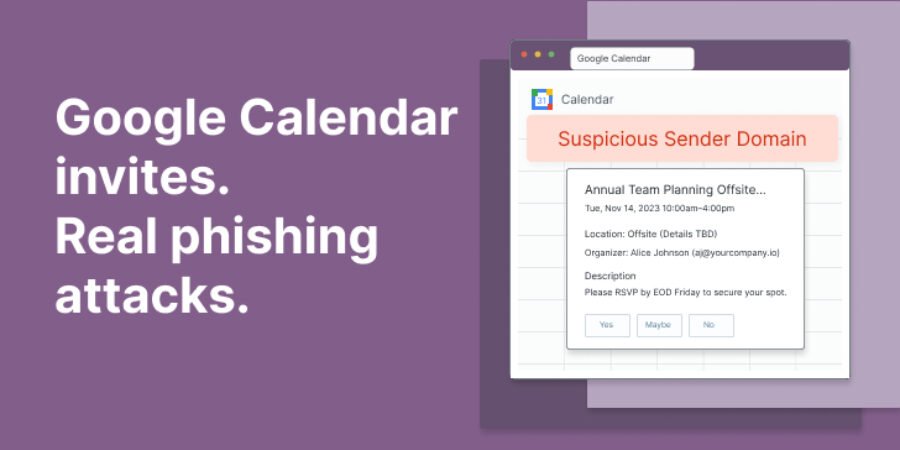
At the heart of this phishing operation lies a deceptively simple yet effective technique: the use of **calendar invites** to lure victims into a false sense of security. By sending seemingly legitimate calendar invites that link to malicious sites, attackers can manipulate corporate users into inadvertently providing their Google credentials. The invitations often appear to originate from trusted sources, making them particularly insidious. This method exploits the inherent trust users place in calendar notifications, effectively bypassing initial skepticism.
Another critical component of this campaign is the use of **live proxies**. Once a user unwittingly enters their credentials, the attackers leverage these proxies to capture the live session. This enables them to authenticate as the user in real-time, granting access to sensitive corporate information and resources. The attackers have meticulously crafted their approach to ensure that standard security measures—such as link scanning and reputation checks—return clean results, thereby evading detection. This technical sophistication underscores the importance of continuous vigilance and adaptive security measures.
Moreover, the attackers have demonstrated an ability to scale their operations rapidly. By exploiting compromised domains and rapidly generating new ones, they can continuously target users without the risk of being quickly shut down. This adaptability allows them to maintain pressure on organizations, creating a cycle of fear and uncertainty. As the campaign evolves, it raises questions about the effectiveness of current cybersecurity frameworks and the need for innovation in defense strategies.
Scope and Real-World Impact
The impact of this session hijacking campaign extends far beyond individual users; it has the potential to disrupt entire organizations. With a focus on corporate accounts, the attackers are likely gaining access to sensitive data, proprietary information, and critical communication channels. This could lead to severe financial losses, reputational damage, and regulatory repercussions for affected organizations. Comparatively, previous phishing campaigns, such as the 2020 SolarWinds incident, have shown that the fallout can be catastrophic, affecting thousands of organizations globally.
As of now, the scope of affected users seems substantial, with estimates suggesting that hundreds of corporate accounts may have been compromised. The attackers’ ability to create clean links and utilize trusted platforms means that the reach of this campaign could potentially span various industries, making it a pervasive threat. Countries with a strong reliance on cloud technologies—such as the United States, Canada, and several European nations—are likely at higher risk, given the concentration of corporate infrastructure within these regions.
The ramifications of such breaches are profound. Sensitive data can be exfiltrated, leading to intellectual property theft and financial exploitation. It also raises questions about the integrity of corporate communications and the potential for further attacks through compromised accounts. In light of these events, organizations must reassess their security postures to mitigate risks associated with this evolving threat landscape.
Attack Vectors and Methodology
The campaign employs a multi-faceted attack vector that includes several key steps:
- Phishing Initiation: Attackers send calendar invites containing links to malicious sites disguised as legitimate.
- User Interaction: Victims receive the invite, which appears to be from a trusted source, prompting them to click on the link.
- Credential Harvesting: Upon clicking, users are directed to a fake login page where their Google credentials are collected.
- Session Hijacking: Using live proxies, attackers capture the active session, allowing them to impersonate the user in real-time.
- Data Exfiltration: Once inside, attackers can access sensitive corporate information, leading to potential data breaches.
Mitigation and Defense Recommendations
In light of the escalating threats posed by this phishing campaign, organizations must implement robust security measures:
- Security Awareness Training: Regularly train employees to recognize phishing attempts, including calendar invites.
- Multi-Factor Authentication (MFA): Implement MFA for all corporate accounts to add an additional layer of security against credential theft.
- Link Scanning Tools: Utilize advanced link scanning tools that analyze URLs for malicious content beyond standard checks.
- Incident Response Plans: Develop and regularly update incident response plans to quickly address potential breaches.
- Regular Security Audits: Conduct frequent audits of security protocols and systems to identify vulnerabilities and mitigate risks.
Industry Implications and Expert Perspective
The long-term consequences of this campaign extend beyond immediate financial losses; they influence broader industry trends and the state of cybersecurity. As cybercriminals become increasingly sophisticated, organizations must adapt their security frameworks to keep pace. The rise of phishing campaigns that effectively exploit trusted platforms signals a critical shift in how organizations must approach cybersecurity.
Experts emphasize the need for a holistic approach to cybersecurity that prioritizes not only technology but also human factors. The integration of **behavioral analytics** can help organizations identify anomalies in user behavior, providing an additional layer of defense. Furthermore, as artificial intelligence continues to evolve, it can play a pivotal role in threat detection and response, enabling organizations to respond proactively to emerging threats.
This campaign serves as a wake-up call for the industry, highlighting the necessity for ongoing investment in cybersecurity measures. As the threat landscape evolves, the focus must shift towards creating resilient infrastructures that can adapt to new challenges, ensuring that organizations are not just reactive but also proactive in their defense strategies.
Conclusion
The Google session hijacking campaign is a stark reminder of the evolving landscape of cybersecurity threats. With attackers becoming increasingly adept at exploiting vulnerabilities in widely used platforms, organizations must remain vigilant and proactive in their security measures. The use of calendar invites and live proxies underscores the need for innovative defense strategies that extend beyond traditional methods.
As we navigate this complex threat landscape, collaboration between organizations, security experts, and technology providers will be crucial in developing effective solutions. Ultimately, fostering a culture of security awareness and embracing advanced technological defenses will be key to mitigating the risks posed by such sophisticated phishing operations.
Original source: thehackernews.com