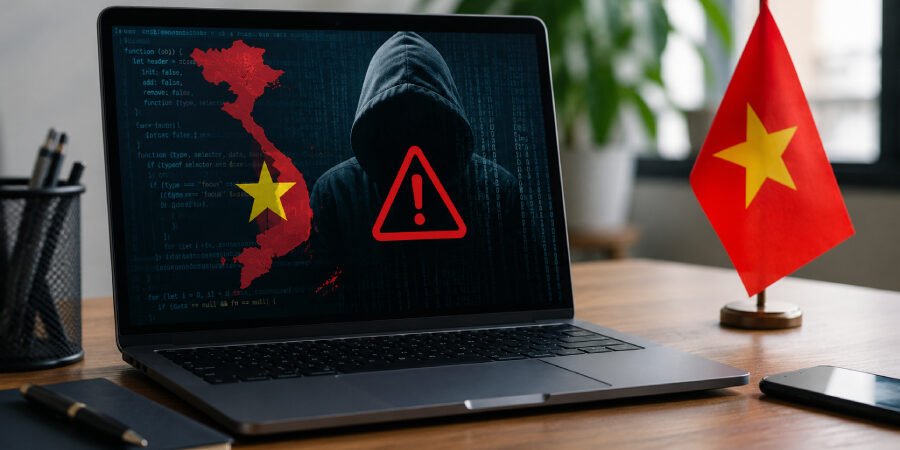
OceanLotus Strikes: The SPECTRALVIPER Cyber Espionage Campaign Against Vietnamese Investors
Background and Context
The recent cyber espionage campaign orchestrated by the Vietnam-aligned threat actor known as OceanLotus has raised significant alarm within the cybersecurity community. This group, also referred to as APT32, has a history of targeting entities aligned with Vietnamese interests, yet the latest incidents underscore a troubling evolution in their tactics and targets. The campaigns, which have been active from mid-2024 until February 2026, focus on domestic companies and stock investors, indicating a calculated effort to undermine national economic stability and extract sensitive financial information. As global interest in Vietnam as an emerging market grows, so too does the risk of such cyber operations, suggesting a wider strategy that leverages espionage to impact international business dynamics.
Historically, OceanLotus has been involved in numerous attacks, often linked to the Vietnamese government’s interests. The group has previously targeted foreign enterprises and dissidents, but this latest campaign marks a shift towards local stakeholders. Such operations are not unique; they mirror past incidents involving other state-sponsored actors who have similarly leveraged cyber capabilities to secure economic advantages. For instance, the 2020 SolarWinds attack highlighted how cyber threats can target supply chains and impact multiple organizations simultaneously, raising questions about vulnerabilities in interconnected systems.
The timing of these attacks is particularly concerning, as Vietnam is experiencing a rapid expansion in infrastructure and technology sectors. The government’s push towards modernization and digital transformation makes it a prime target for adversaries seeking to capitalize on potential weaknesses. As economic dependencies increase, the implications of such cyber intrusions extend beyond immediate financial losses—they could destabilize investor confidence and harm the nation’s emerging market reputation.
Technical Analysis
At the core of OceanLotus’s recent campaigns is the sophisticated backdoor malware known as **SPECTRALVIPER**. This malware is designed to infiltrate systems discreetly, allowing attackers to maintain persistent access while exfiltrating sensitive data. What sets SPECTRALVIPER apart from other malware is its ability to evade traditional detection methods, employing advanced obfuscation techniques that complicate reverse engineering efforts. This capability is particularly worrisome for organizations that rely on conventional cybersecurity measures which may not be equipped to identify such stealthy intrusions.
The architecture of SPECTRALVIPER indicates a modular design, enabling the attackers to customize their payloads based on the targeted environment. Once installed, it can execute a range of malicious activities, including keylogging, screen capturing, and data exfiltration through encrypted channels. The malware’s ability to adapt to various operating systems and network configurations makes it a versatile tool in the hands of its operators, facilitating a wide array of cyber-espionage activities.
Furthermore, the use of **supply chain attacks** in conjunction with SPECTRALVIPER adds another layer of complexity to the threat landscape. By targeting trusted vendors or service providers, OceanLotus can compromise multiple organizations through a single breach point. This tactic not only enhances the likelihood of success but also amplifies the potential impact of the attack, as many organizations may not realize they are vulnerable until it is too late.
Scope and Real-World Impact
The implications of the OceanLotus campaigns are profound. By specifically targeting Vietnamese investors and domestic firms, the attackers have compromised a significant amount of sensitive financial data. Investors and corporations are now at increased risk of fraudulent activities and financial manipulation. The breach of trust in the financial ecosystem could deter foreign investments, ultimately stunting economic growth in a region striving for financial stability.
In comparison, previous incidents, such as the 2017 Equifax breach, which exposed the personal data of over 147 million Americans, illustrate the long-term repercussions of such cyber intrusions. While the immediate fallout can include financial losses and regulatory scrutiny, the broader impact often manifests as reputational damage that takes years to recover from. In Vietnam’s case, a similar trajectory could ensue, with long-lasting effects on its burgeoning economy and investor relations.
Attack Vectors and Methodology
The methodologies employed by OceanLotus during these campaigns reveal a systematic approach to cyber espionage. The attack vectors include:
- **Phishing Emails:** The attackers often initiate their campaigns via targeted phishing emails designed to appear legitimate, tricking recipients into downloading malware-laden attachments or clicking on malicious links.
- **Supply Chain Compromises:** By infiltrating trusted vendors, OceanLotus can exploit existing relationships to distribute SPECTRALVIPER to multiple targets within the supply chain.
- **Exploiting Vulnerabilities:** The group may leverage known software vulnerabilities to gain unauthorized access to systems, particularly those lacking up-to-date security patches.
- **Custom Payload Delivery:** Once access is gained, SPECTRALVIPER is deployed, which allows for data gathering and ongoing surveillance.
Mitigation and Defense Recommendations
To combat the threats posed by OceanLotus and similar groups, organizations must adopt a multi-layered defense strategy. Recommendations include:
- **Implement Advanced Threat Detection:** Utilize behavioral analysis tools that can identify suspicious activities indicative of malware infections, rather than relying solely on signature-based detection.
- **Regular Security Training:** Conduct regular training sessions for employees on recognizing phishing attempts and safe online practices to reduce the likelihood of initial compromise.
- **Patch Management:** Ensure that all software, especially those related to critical infrastructure, is regularly updated to protect against known vulnerabilities.
- **Incident Response Planning:** Develop and regularly update an incident response plan that outlines steps to take in the event of a breach, including communication strategies for stakeholders.
Industry Implications and Expert Perspective
The rise of OceanLotus and its sophisticated tactics reflects a broader trend in cybersecurity where state-sponsored actors are increasingly targeting domestic firms as means of economic warfare. Experts emphasize the need for an enhanced focus on cybersecurity within national economies, particularly in regions like Southeast Asia, where reliance on digital infrastructure is growing rapidly. With incidents like these, businesses are now compelled to take a proactive stance on cybersecurity, not just to protect their assets but to safeguard their reputations in the global market.
Moreover, as the sophistication of cyber threats continues to escalate, the cybersecurity industry must adapt by innovating new tools and strategies to counteract these emerging threats. Collaboration between private and public sectors will be crucial in developing a robust defense strategy that can respond to the evolving tactics of threat actors like OceanLotus.
Conclusion
The OceanLotus campaigns utilizing SPECTRALVIPER represent a significant shift in the landscape of cyber threats, particularly for countries like Vietnam that are becoming increasingly important players in the global economy. As these attacks demonstrate, the vulnerabilities of domestic entities can be exploited for geopolitical maneuvering, underscoring the need for heightened vigilance in cybersecurity practices. Organizations must prioritize cybersecurity not just as an IT issue, but as a critical component of their overall business strategy to mitigate risks and foster investor confidence.
As we move forward in this digital age, the lessons learned from incidents like those perpetrated by OceanLotus will serve as reminders that the battle for information security is ongoing and that preparedness is key to resilience in the face of evolving threats.
Original source: thehackernews.com