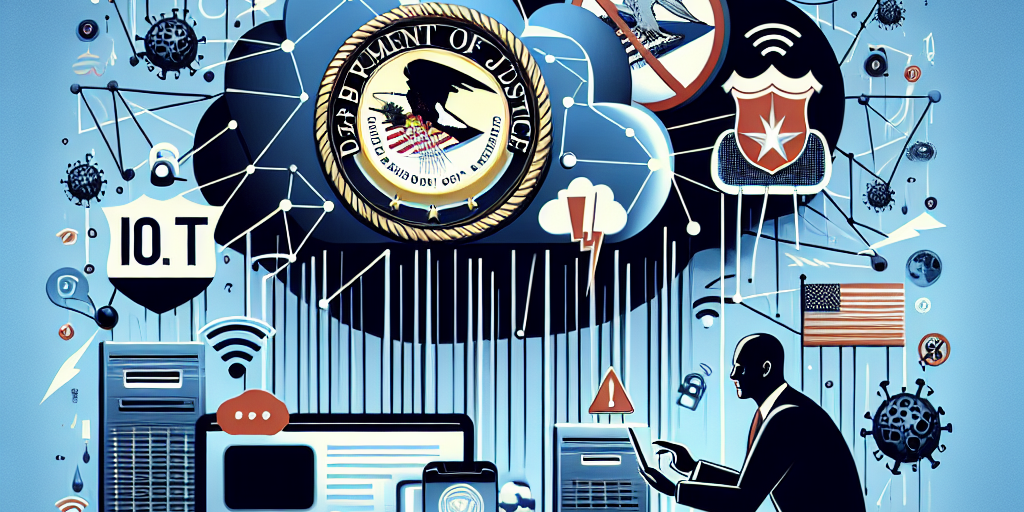
U.S. DoJ Disrupts Major IoT Botnets Behind Record DDoS Attacks
Introduction
On March 20, 2026, the U.S. Department of Justice (DoJ) announced a significant operation that disrupted the command-and-control (C2) infrastructure of multiple Internet of Things (IoT) botnets, including AISURU, Kimwolf, JackSkid, and Mossad. This coordinated effort, which involved collaboration with Canadian and German authorities, targeted the underlying operations of these notorious botnets, which have been implicated in record-level global DDoS (Distributed Denial of Service) attacks measuring 31.4 Tbps. This disruption marks a critical moment in the ongoing battle against cybercrime, particularly as it relates to the vulnerabilities presented by IoT devices.
Background: The Rise of IoT Botnets
The proliferation of IoT devices over the past decade has dramatically changed the landscape of cybersecurity. Everyday objects such as smart thermostats, cameras, and appliances often come with inadequate security measures, making them attractive targets for cybercriminals. IoT botnets leverage these compromised devices to conduct large-scale attacks, significantly amplifying the volume of malicious traffic directed at intended targets.
The AISURU, Kimwolf, JackSkid, and Mossad botnets are among the most infamous, responsible for a series of high-profile DDoS attacks that have disrupted services for numerous organizations worldwide. DDoS attacks can degrade the performance of networks and disrupt operations, posing a severe risk to both public services and private enterprises. For instance, the attack that peaked at 31.4 Tbps shattered previous records and showcased the devastating potential of linked IoT devices when weaponized by cybercriminals.
Expert Commentary: Impact on Cybersecurity Practices
Cybersecurity experts have long warned of the risks posed by insecure IoT devices. With the DoJ’s recent actions, there’s an urgent need for enterprises, especially those leveraging IoT technology, to reassess their security frameworks. According to Dr. Emily Carter, a cybersecurity analyst at TechSecure, “This operation sends a clear message: underestimating the security implications of IoT devices can lead to severe consequences. Companies must prioritize the implementation of robust security measures, including regular updates and adherence to security protocols, to safeguard their networks.”
“This operation sends a clear message: underestimating the security implications of IoT devices can lead to severe consequences.” — Dr. Emily Carter, Cybersecurity Analyst
Comparative Cases and The Growing Threat Landscape
The dilemma posed by IoT botnets is not isolated. In recent years, attacks by botnets such as Mirai and its variants have demonstrated the potential for civilian infrastructure to be compromised through IoT devices. The Mirai botnet, for example, was instrumental in the 2016 Dyn attack, which disrupted large segments of the internet and brought attention to the vulnerabilities of connected devices.
Statistics reveal a troubling trend: recent reports indicate that the number of detected DDoS attacks has surged, with the volume and sophistication of attacks increasing year over year. According to the cybersecurity firm Akamai, DDoS attacks have doubled in frequency since 2020, revealing a dynamic threat landscape that requires constant vigilance.
Risks and Implications for Organizations
The potential ramifications of these botnet disruptions extend beyond immediate cyber security concerns. Organizations that experience DDoS attacks may face reputational damage, loss of customer trust, and significant financial losses due to downtime and recovery efforts. Furthermore, the continuous evolution of cyber threats means that businesses operating in the digital space must remain proactive in their defense strategies.
Practical recommendations for organizations include:
- Conducting regular security assessments and vulnerability scans on all IoT devices.
- Implementing network segmentation to isolate IoT devices from core business systems.
- Updating default passwords and employing strong, unique passwords for all connected devices.
- Investing in advanced DDoS mitigation services to enhance network resilience.
- Establishing an incident response plan specifically addressing DDoS attacks.
Conclusion
The disruption of major IoT botnets by the DoJ illustrates a crucial step in combating cybercrime and safeguarding online infrastructures. However, it also highlights the persistent vulnerabilities associated with the growing number of IoT devices. As cyber threats continue to evolve, organizations must adopt robust security protocols and remain vigilant to protect themselves from potential attacks. The importance of collaboration among international law enforcement and the private sector cannot be overstated, as collective efforts will significantly bolster defense mechanisms against future cyber threats.
Source: thehackernews.com