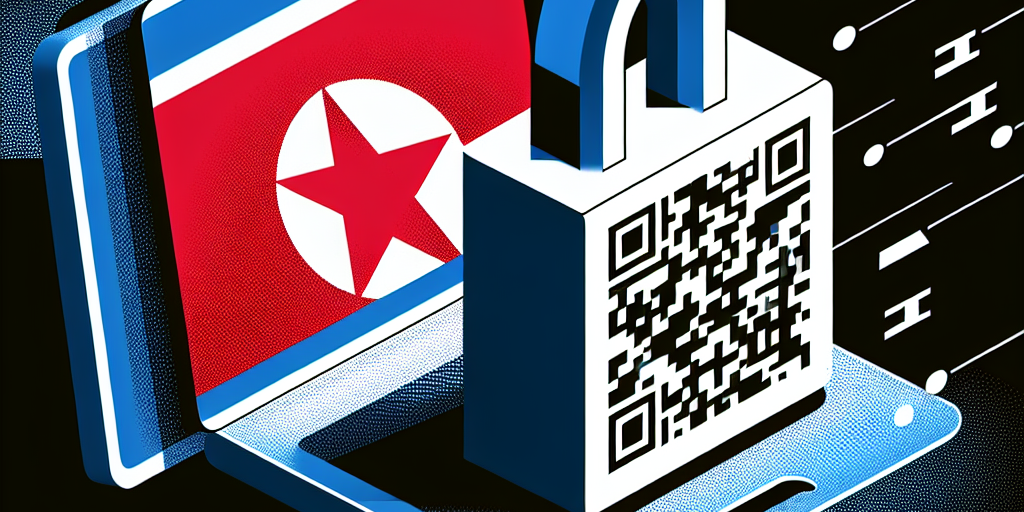
FBI Alerts on North Korean Hackers Exploiting QR Codes for Targeted Cyberattacks
Background and Context
The U.S. Federal Bureau of Investigation (FBI) has recently issued a warning regarding the tactics employed by North Korean state-sponsored cyber actors, particularly a group known as Kimsuky. Recognized for its persistent spear-phishing campaigns, Kimsuky has now begun leveraging embedded malicious QR codes to enhance the effectiveness of its attacks. This development marks a significant evolution in their methodologies, reflecting a growing trend in the exploitation of widely-used technologies for malicious purposes.
Historically, Kimsuky has targeted a range of entities, including think tanks, academic institutions, and governmental organizations—both in the United States and internationally. These actors typically aim to extract sensitive information, steal credentials, or proliferate malware. The integration of QR codes serves not only to modernize their arsenal but also to exploit the increasing prevalence of QR code usage during the COVID-19 pandemic, a time when many services shifted to contactless interactions.
Expert Analysis and Commentary
The shift to QR codes represents a technologically savvy approach by North Korean hackers. As noted by cybersecurity experts, QR codes are perceived as benign and often do not raise immediate suspicion among users. This false sense of security makes them ideal for phishing attempts. Experts advise that organizations should increase awareness about the potential risks associated with scanning QR codes, especially links that require sensitive information or lead to login pages.
“Cyber hygiene has to include scrutinizing QR codes, especially in professional settings where sensitive data may be at stake. The stakes are particularly high when dealing with government and academic institutions,” said Dr. Emily Chen, a cybersecurity analyst.
In contrast to traditional phishing emails that require the recipient to click a link within a potentially suspicious message, malicious QR codes bypass email filters and firewalls, presenting a unique challenge for organizations in safeguarding their networks.
Comparative Cases and Statistics
Another notable case that underscores the dangers of QR code exploitation involved an Australian telecommunications firm, which reported that employees inadvertently exposed sensitive data by scanning QR codes. This incident mirrored broader trends observed in cybersecurity where QR codes were increasingly targeted. According to a report by a cybersecurity firm, incidents involving malicious QR codes surged by 200% in the past year, significantly impacting various sectors, including finance and technology.
As organizations integrate new technologies into their operations, the threat landscape will continue to evolve. Statistics show that the FBI’s Internet Crime Complaint Center received over 300,000 complaints regarding phishing and other cybercrimes in 2022 alone, underscoring the growing scope of the problem.
Potential Risks and Implications
The implications of falling victim to such spear-phishing attacks can be severe. If organizations fail to recognize these threats, they risk unauthorized access to confidential information, intellectual property loss, and substantial financial repercussions. Moreover, successful breaches can lead to reputational damage, which can take years to repair.
Experts caution that the blurred lines between work and personal devices can further exacerbate these risks. Many employees may easily scan QR codes in a casual setting without thinking critically about potential consequences, making it essential for organizations to support their staff through training and policy enforcement.
Actionable Recommendations
- Conduct regular cybersecurity training sessions for employees, emphasizing the importance of scrutinizing QR codes before scanning.
- Implement strong access controls and monitoring for any systems that handle sensitive information.
- Utilize two-factor authentication where possible, which can provide an additional layer of security against compromised credentials.
- Assist IT departments to develop protocols for assessing and mitigating QR code risks, including temporary disabling of QR code scanners on organizational devices.
- Establish a clear communication channel for reporting suspicious QR codes or phishing attempts, encouraging employees to share their experiences.
Conclusion
The FBI’s advisory regarding North Korean hackers exploiting QR codes highlights the evolving nature of cyber threats and the necessity for organizations to stay vigilant. As spear-phishing tactics become more sophisticated, prioritizing cybersecurity awareness and technical safeguards will be critical. By proactively addressing these risks and implementing recommended practices, entities can better fortify themselves against potential breaches that leverage embedded malicious QR codes.
Source: thehackernews.com